
How to Choose the Right Motor: A Guide from Dongming Motor
In modern industry and everyday life, motors are omnipresent, serving as an indispensable source of power for everything from household appliances to industrial equipment. Faced with a wide array of motor products, how can you select a motor that meets your specific needs? Dongming Motor has prepared this detailed guide to help you make a well-informed choice.
- Clarify Application Requirements
Before selecting a motor, it is essential to identify the specific application scenario and requirements. Different applications have varying demands for motor performance, size, power, torque, and other parameters. For example:
Household Appliances: Typically require small, efficient, low-noise motors.
Industrial Equipment: May demand high-power, high-torque motors that can withstand high temperatures and humidity.
Robots and Automation Equipment: Require high-precision, high-response-speed motors.
- Understand Motor Types
There are various types of motors, each with unique characteristics and applications. Common types include:
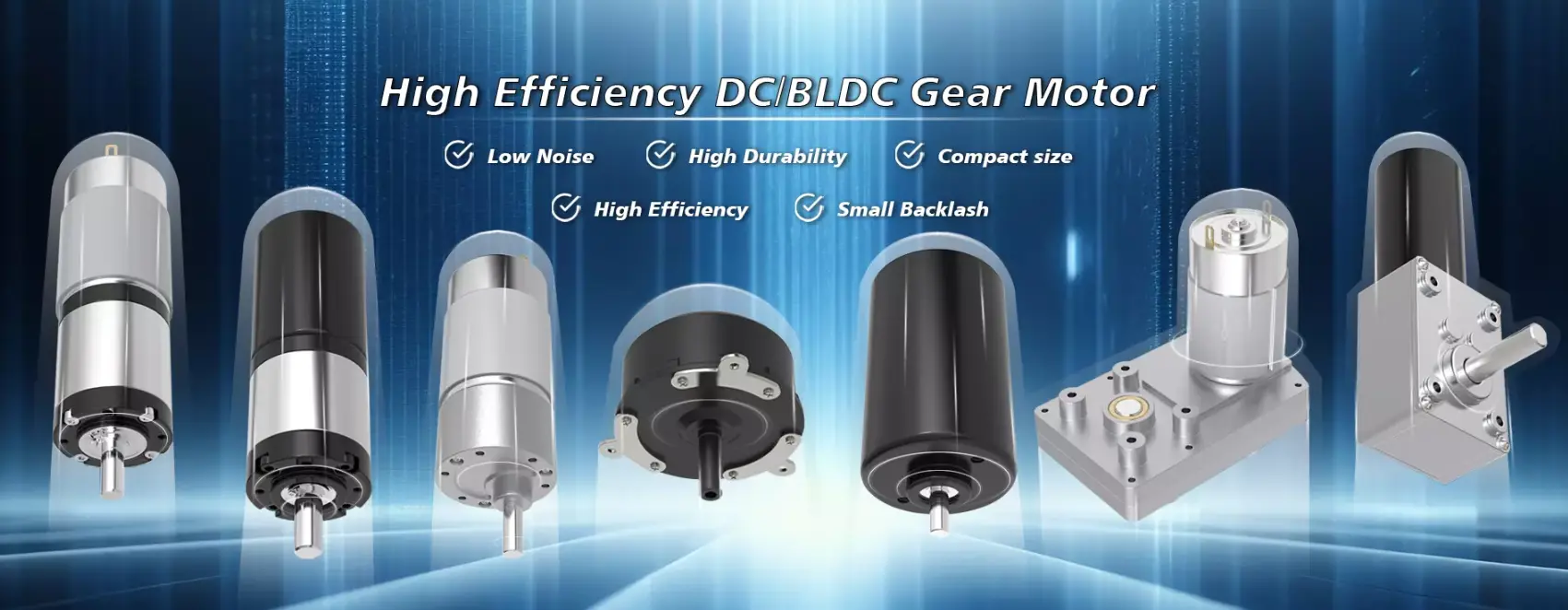
Brushless Motors: Known for their high efficiency, long life, and low noise, they are ideal for high-performance applications like drones and electric vehicles.
Brushed Motors: Lower in cost and suitable for general applications, but with a shorter lifespan and the need for regular maintenance.
Worm Gear Motors: Increase torque through a gearbox and are suitable for applications requiring high torque, such as robotic arms and conveyor belts.
- Consider Motor Parameters
When selecting a motor, consider the following key parameters:
Power: Determines the energy the motor can provide, higher power means stronger driving force.
Torque: The rotational force of the motor’s output shaft, high-torque motors are suitable for applications requiring significant rotational force.
Speed: The number of rotations per minute (RPM) of the motor. Different applications have varying speed requirements.
Voltage: Determines the required power supply voltage for the motor. Our motor have 6V,12V, 24V.
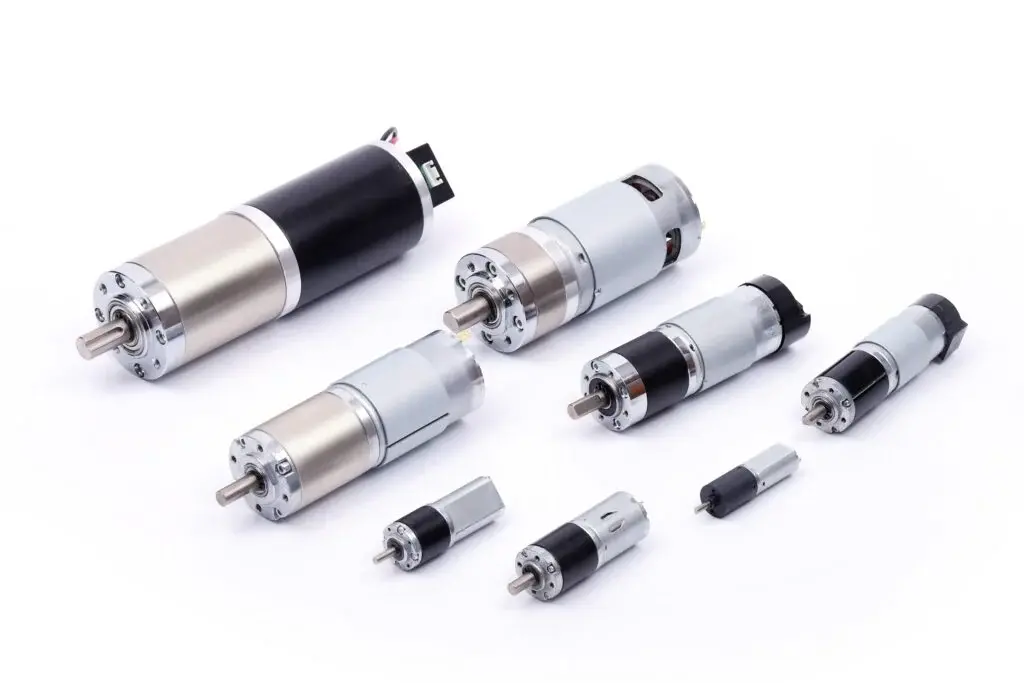
Size: The motor’s dimensions must match the installation space of the equipment. Ensure the motor fits your device.
- Evaluate Motor Performance
In addition to basic parameters, assess the motor’s performance, including:
Efficiency: The ability of the motor to convert electrical energy into mechanical energy. High-efficiency motors save energy and reduce operating costs.
Noise: Some applications have strict noise requirements, such as household appliances and medical devices. Choosing low-noise motors can enhance user experience.
Lifespan: The motor’s lifespan depends on its quality and operating environment. Brushless motors generally have a longer lifespan than brushed motors but are also more expensive.
- Consider Additional Features
Some motors offer additional features, such as:
Encoder: Used for precise measurement of motor speed and position, suitable for applications requiring high-precision control.
Brake: Used for rapid motor stopping, suitable for applications requiring quick response.
Overload Protection: Prevents motor damage from overloading and extends motor life.
- Get Professional Advice
You can directly contact Dongming Motor’s customer service team for assistance., and we will reply immediately and provide a solution.
Choosing the right motor requires a comprehensive consideration of application requirements, motor types, parameters, performance, and additional features. With years of experience and technical expertise, Dongming Motor offers high-quality products and professional services. We are committed to helping every customer find the most suitable motor solution. If you have any questions or need further assistance, please contact us at any time.
Selection parameters at a glance
The six steps above are the process. These are the numbers you will actually be asked for, and the ranges we normally work in for miniature DC and BLDC gear motors:
| Parameter | Typical range we build | What it decides |
|---|---|---|
| Voltage | 6V, 12V, 24V | Available speed and torque for a given frame size |
| Reduction ratio | 3.7:1 up to 625:1 (4-stage planetary, 42 mm) | Output speed and torque multiplication |
| Frame diameter | 24, 28, 32, 36, 42, 56 mm | Torque ceiling and installation envelope |
| Gearbox efficiency | 90% (1 stage) down to 65% (4 stages) | How much motor torque actually reaches the load |
| Gearbox length | 33.2 mm (1 stage) to 64.4 mm (4 stages), 42 mm frame | Whether it fits the space you have |
| Breaking torque | 15 / 25 / 50 / 50 kgf·cm for 1 to 4 stages | The hard ceiling before you need a bigger gearbox |
Two of these rows cause most of the rework we see. Efficiency and breaking torque are the ones people skip, and both of them get worse as ratios go up. A useful habit: work backwards from the output speed you need, take the smallest stage count that gets there, then confirm the breaking torque is above your worst-case stall load.
If you would rather hand the numbers over and get a recommendation back, send us your load and speed requirements and we will size it against your duty cycle. The background reading that usually helps most is the micro DC motor sizing guide for the gear-ratio arithmetic, DC motor vs DC gear motor for the motor-versus-gearmotor decision, and gear motor working principle for the parameter definitions on a datasheet.
For reference on how efficiency itself is measured and reported, the method is defined in IEC 60034-2-1.
Related reading
{acf_post_brief}