
What Is DC Gear Motor
Concept of DC Gear Motor
A DC geared motor, often referred to as a DC reduction motor, is a critical component in modern electromechanical systems. By integrating a DC motor with a gearbox, this device efficiently balances speed and torque to meet diverse industrial and consumer demands. Designed to convert high-speed, low-torque input into controlled, high-torque output, DC geared motors are indispensable in applications ranging from robotics to everyday appliances.
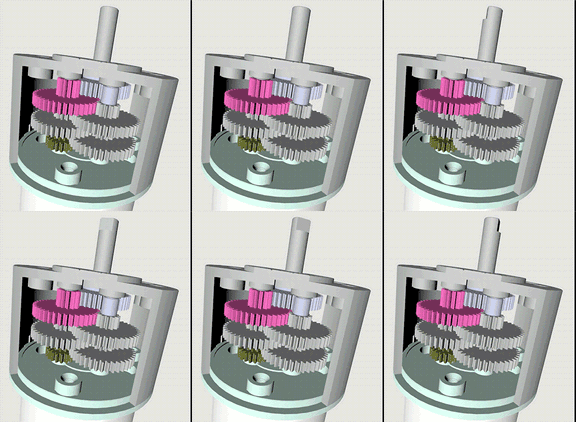
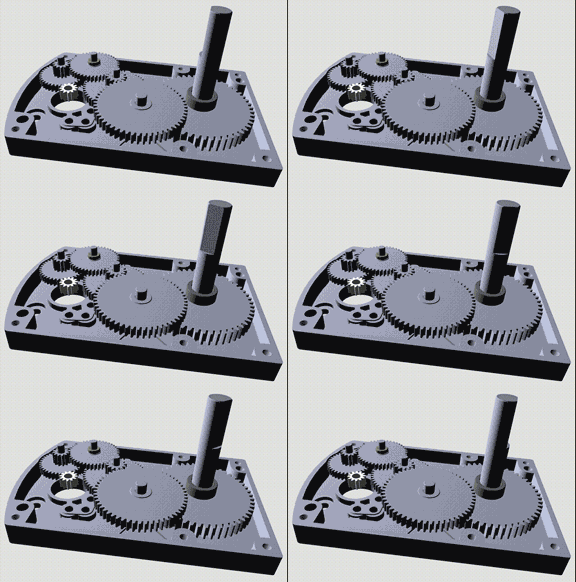
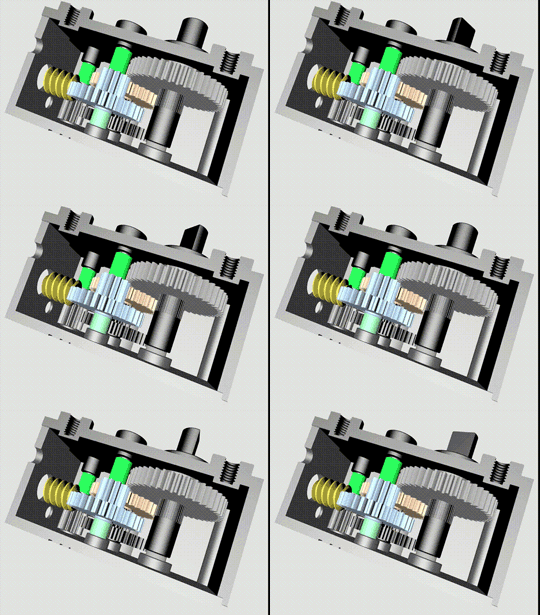
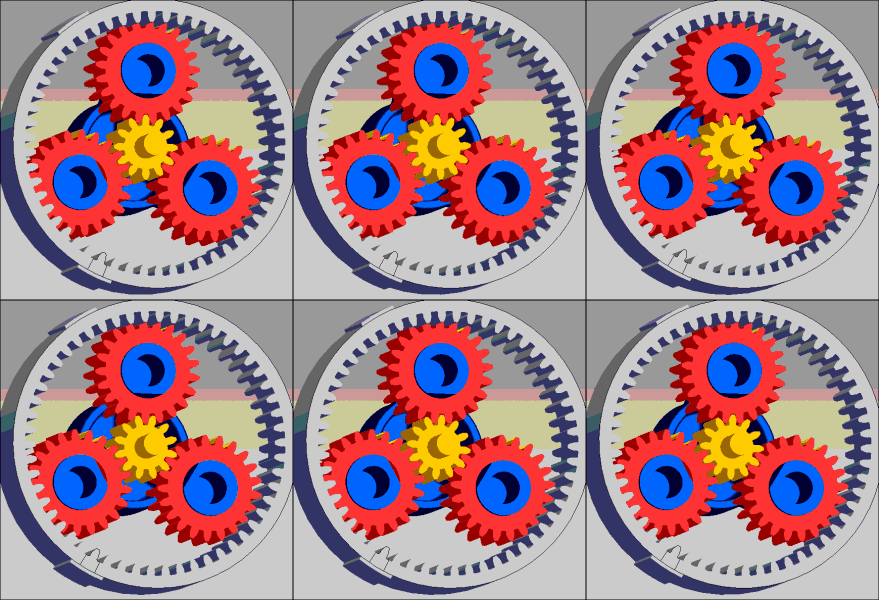
Core Components and Functionality
At its heart, a DC geared motor comprises two primary elements: a DC motor and a gear reduction system. The DC motor serves as the power source, generating rapid rotation with minimal torque. Brushed DC motors, known for their simplicity and affordability, rely on carbon brushes and commutators for operation. In contrast, brushless DC (BLDC) motors eliminate physical brushes, using electronic controllers for commutation. This design enhances efficiency, reduces maintenance, and extends lifespan, albeit at a higher cost.
The gearbox, attached to the motor’s output shaft, is responsible for modulating performance. Through a series of gears—such as spur, planetary, or worm gears—the gearbox reduces rotational speed while proportionally amplifying torque. For instance, a 10:1 gear ratio would lower a motor’s 3,000 RPM output to 300 RPM while multiplying torque tenfold. This transformation ensures the motor operates within its optimal efficiency range, preventing overload and enhancing durability.
Types and Applications
DC geared motors are categorized by motor type and gear mechanism, each suited to specific use cases.
Brushed DC geared motors are widely used in cost-sensitive applications. Their straightforward design makes them ideal for household devices like electric curtain, small toys, and basic automation systems. However, their brushes wear over time, necessitating periodic maintenance.
Brushless DC geared motors, though pricier, excel in high-performance environments. Their lack of brushes minimizes friction, reduces electromagnetic interference, and enables precise control. These motors dominate advanced robotics, drones, and medical equipment, where reliability and precision are paramount.
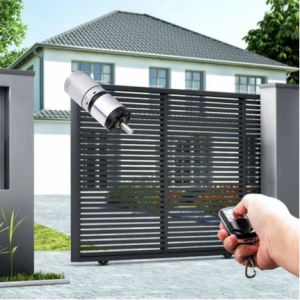
Gearbox designs further diversify functionality. Spur gear systems, with their straightforward arrangement of parallel gears, offer affordability and ease of manufacturing. They are common in printers and light-duty machinery but generate noticeable noise under load. Planetary gear systems, featuring concentric gear sets, deliver superior torque density and precision in a compact form. These are favored in robotic arms, automated guided vehicles (AGVs), and servo systems. Worm gear mechanisms, utilizing a screw-like gear meshing with a wheel, provide self-locking capabilities and high reduction ratios. This makes them ideal for elevators, gates, and heavy lifting equipment, despite their lower efficiency.
For ultra-high precision applications, harmonic drive systems employ flexible gears to achieve near-zero backlash. Though costly, they are indispensable in aerospace and industrial robotics.
Spur, planetary, worm and harmonic gears: side-by-side comparison
| Gear type | Torque density | Noise | Self-locking | Typical gearbox efficiency | Best suited for |
|---|---|---|---|---|---|
| Spur | Low-medium | Louder under load | No | 85-95% | Printers, toys, light-duty machinery |
| Planetary | High | Quiet, coaxial | No | 80-95% | Robot arms, AGVs, servo systems |
| Worm | High ratio in one stage | Quiet | Yes | 40-70% | Gates, lifts, heavy lifting |
| Harmonic | High, near-zero backlash | Quiet | No | 70-85% | Aerospace, surgical robotics |
Efficiency figures are typical industry ranges for the gearbox alone; the exact value shifts with stage count, lubrication and load. For the most common pairing, see the DC planetary gear motor guide and the planetary vs spur comparison.

Performance Considerations
Selecting a DC geared motor hinges on key parameters:
-
Voltage (e.g., 12V, 24V) dictates power input and compatibility.
-
Output speed (RPM) and torque (N·m) must align with load requirements.
-
Gear ratio determines the trade-off between speed reduction and torque amplification.
-
IP ratings (e.g., IP65) ensure resistance to environmental factors like dust and moisture.
Typical specification ranges of DC gear motors
Exact numbers vary with gearbox diameter and stage count, but most standard DC gear motors fall into these ranges. Confirm every value below before comparing models:
| Parameter | Typical range | Why it matters |
|---|---|---|
| Rated voltage | 3 V – 24 V (12 V and 24 V most common) | Higher voltage draws less current for the same power |
| Gear ratio | 1:5 to 1:300 standard builds; multi-stage up to 1:1000+ | Ratio divides speed and multiplies torque |
| Output speed | 5 – 500 RPM | Continuous-duty drives should sit below the rated point, not near stall |
| Continuous torque | 0.1 – 50 N·m | Set by gearbox diameter and stage count, not by the DC motor alone |
| Gearbox efficiency | 80 – 95% | Planetary is highest per stage; worm is lowest |
| IP rating | IP20 – IP65 | Match to dust and moisture exposure |
| Duty type | S1 continuous / S2 short-time | Thermal margin depends on the duty cycle |
Ranges reflect common catalog values for brushed and brushless DC gear motors; special windings and custom gearboxes can go outside them.
Advantages and Trade-offs
DC geared motors excel in torque customization and space efficiency. Their integrated design simplifies installation, while gear ratios allow engineers to fine-tune performance. However, mechanical friction in gear systems introduces energy losses, typically reducing efficiency to 80–95%. Noise levels also vary—spur gears are louder, while planetary or worm gears operate more quietly. Maintenance demands differ by type: brushed motors require periodic brush replacement, and worm gears need lubrication to mitigate wear.
Industry Applications
From smart homes to heavy industry, DC geared motors drive innovation. In robotics, planetary gear systems paired with BLDC motors enable precise joint movements. Conveyor belts and sorting machines rely on robust worm gear setups for heavy loads. Everyday conveniences like motorized curtains , small toys, and basic automotive systems (e.g., power windows) leverage cost-effective brushed motors. Meanwhile, harmonic drives in surgical robots and aerospace systems underscore the technology’s role in cutting-edge fields.

Choosing the Right Motor
Selecting a DC geared motor involves balancing performance needs with budget constraints. For high-precision tasks, BLDC motors with planetary or harmonic gears deliver unmatched accuracy. Applications requiring self-locking mechanisms benefit from worm gear designs. Budget-conscious projects may opt for brushed motors with spur gears, while long-term reliability goals justify investments in brushless systems.
Conclusion
DC geared motors epitomize the synergy of electrical and mechanical engineering. By transforming raw motor output into tailored motion, they empower devices across industries to operate smarter, stronger, and more efficiently. As technology advances, these motors will continue to evolve, driving progress in automation, robotics, and beyond.
If you need our motor but don’t know how to choose, please contact us and we will recommend the most suitable motor to you. Our email address is dmdcsales@dmdcmotor.com.
Frequently Asked Questions
The questions below are the ones engineers ask most often before specifying a geared motor. Each answer is covered in more detail in the sections above.
What is the difference between a DC gear motor and a DC geared motor?
They are the same device. A DC gear motor, a DC geared motor and a geared DC motor all describe a DC motor combined with a gearbox. The wording differs between suppliers, but the construction and function are identical: the gearbox reduces output speed and multiplies torque.
How much torque does the gearbox add?
Output torque rises roughly in proportion to the gear ratio. A 10:1 ratio turns a 3,000 RPM motor output into 300 RPM and multiplies torque tenfold. In practice the gain is slightly lower because gear friction removes part of the input power.
Should I choose spur, planetary or worm gears?
Spur gears are the cheapest and easiest to manufacture, but they are the loudest under load, which suits printers and light-duty machinery. Planetary gears give high torque density and precision in a compact frame, which suits robotic arms and AGVs. Worm gears provide self-locking and high reduction ratios for lifts, gates and heavy lifting, at lower efficiency.
What efficiency can I expect from a DC gear motor?
Gear friction typically brings overall efficiency to 80-95%. The exact figure depends on the gear type and the number of stages: each added stage raises the ratio but costs additional efficiency, and worm gears sit at the lower end of the range.
Which specifications do I need before selecting one?
Five values decide the selection: supply voltage (for example 12V or 24V), required output speed in RPM, required output torque in N·m, the gear ratio that connects the two, and the IP rating if the motor will face dust or moisture. Confirm all five before comparing models.
Related reading
- How a DC Gear Motor Works: Working Principle and Torque
- BLDC Planetary Gear Motor: Types, Features, and
- DC Motor vs DC Gear Motor: Differences, Advantages and
- DC Planetary Gear Motor: Construction, Ratios & Selection
- Planetary Gear Motor vs Spur Gear Motor: Which One Fits Your Build?
- Motor applications by industry
- Ask an engineer