
The Difference for Brushed Gear Motor and Brushless Gear Motor
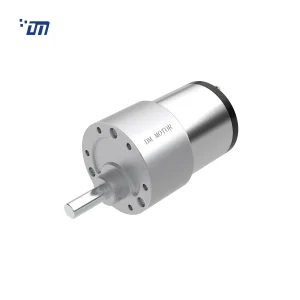
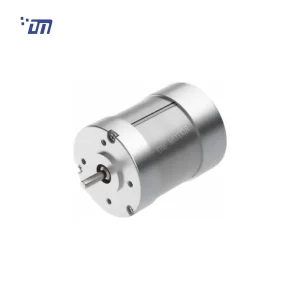
Key Benefits Compared Side by Side |
Brushed Gear Motor | Brushless Gear Motor |
| Cost-effective | Brushed gear motor are generally less expensive than their brushless counterparts. They offer a cost-effective solution for applications with budget constraints. | Brushless gear motor are known for their efficiency and longevity. They have no brushes to wear out, which means minimal maintenance and a longer lifespan. |
| Simplicity and Ease of Control | These Brushed DC gear motor are straightforward to control and have relatively simple electronics, making them a good choice for applications where control complexity is not a priority. Brushed DC gear motors can be controlled by encoder or customized electronic driver. | Brushless DC gear motor offer precise control and better speed regulation by built-in driver or external driver. Their electronic commutation allows for more sophisticated control and customization. |
| Torque at Low Speed | Brushed gear motors provide good torque at low speeds, making them suitable for applications where high torque is needed during startup or at low RPM. | Brushless gear motors can also offer good torque at low speeds, and they often have a flatter torque-speed curve, which can be beneficial for specific applications. |
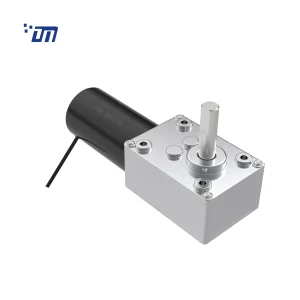
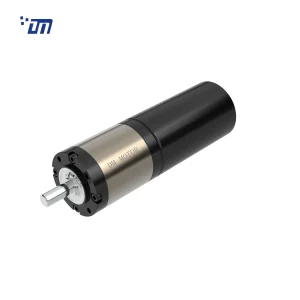
When to Choose Brushed, and When to Choose Brushless
Choose a brushed gear motor when the duty cycle is short or intermittent, the BOM cost is tightly capped, and the product has no room for a driver board – smart locks, toys, actuator valves, and simple appliances are typical cases. Choose a brushless gear motor when the motor runs for hours every day, efficiency regulations apply, or the application needs closed-loop speed control – ceiling fans, service robots, medical pumps, and e-mobility fall into this group. A practical rule of thumb from our project data: if the daily run time exceeds roughly two hours or the product warranty is longer than two years, the higher initial cost of a brushless drive usually pays back through fewer field failures. For a worked example, see our e-bike motor selection comparison.
Related reading
- BLDC Planetary Gear Motor: Types, Features, and
- Brush Or Brushless Motor For An E-Bike? What’s The
- How to Choose the Right Motor: A Guide from Dongming
- Motor applications by industry
- Ask an engineer
Brushed and brushless gear motors serve the same purpose – a DC motor paired with a reduction gearbox – yet they behave very differently in real products. The difference starts at commutation: a brushed motor switches current mechanically through carbon brushes, while a brushless motor does it electronically through a driver circuit. That single difference drives almost every trade-off below, from lifespan and heat to noise and control precision. If you are still deciding which family fits your product, start with the ultimate guide to DC gear motors, then come back to the detailed comparison in this article.
{acf_post_brief}