

Sweeping Robot
Working principle of application products
Sensor system: helps the robot plan the cleaning path and avoid obstacles.
Navigation system: builds maps in real time and optimizes the cleaning path.
Motor drive system: The motor is the core power source of the sweeping robot, used to drive the wheels to move and drive the cleaning brush head to rotate.
How our motor works on the product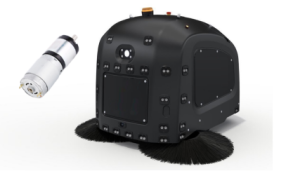
Driving the wheels to move: After the motor is decelerated through the gearbox, it provides power to the wheels of the sweeping robot, enabling it to move smoothly under various ground conditions.
Driving the cleaning brush head to rotate: The motor is also used to drive the cleaning brush head of the sweeping robot to rotate to achieve efficient cleaning effects.
Recommended motor models
According to the application requirements of the sweeping robot, we recommend the following motor models:
DM-36RP545: higher torque output and moderate speed, driving the wheels to move.
DM-46SW395: high torque and low speed characteristics, driving the cleaning brush head to rotate.
DM-37RS545: moderate torque and speed, suitable for sweeping robots that need to balance movement and cleaning functions.
Advantages of our motors
High torque output: Maintains a stable moving speed, easily drives the cleaning brush head to rotate, and achieves efficient cleaning results.
Low noise operation: Advanced design and optimized gearbox maintain low noise level during operation.
High reliability: Strict quality control and testing reduce maintenance and replacement costs.
Compact design: Lightweight and powerful design without compromising its performance and functions.
Customized solutions: Adjust the parameters and design of the motor to meet the unique requirements of different models.
Below: the engineering behind this application, and which of our frames cover it.
Four motors, four different problems inside one sweeping robot
A robot vacuum is usually described as needing a quiet gearmotor, which is true and not very useful. It actually carries three or four motor duties that pull in opposite directions: two drive wheels that need torque and position feedback, a side brush that needs cheap and fast, a main roller brush that needs continuous duty, and on some models a mop-lift or dustbin latch that needs almost nothing except reliability.
The drive wheels are where the design is won or lost. They have to climb a carpet edge and a door sill from a standstill, hold the robot still on a slight slope without drawing current, and report wheel rotation accurately enough for odometry to stay sane over a whole floor plan.
Why the wheel motor cannot be sized from the robot’s weight alone
The instinct is to divide robot weight by wheel radius and add a margin. That number describes steady rolling on a flat floor and is far below what the wheel actually sees. The real load case is a single wheel stalled against a 10 mm sill with the other wheel free — at that moment one motor takes the entire tractive effort plus the breakaway friction of the drive train.
Two more things are usually missing from the first estimate: the gearbox efficiency at the low speed the wheel actually runs at, and the voltage sag when the main brush and the suction fan are both loaded. A wheel motor that is fine on a bench at 14.4 V can fail to start a sill climb at 11.5 V with everything else running.
What we design against on this application
- Stall-safe starting — breakaway torque at the lowest battery voltage, not nominal.
- Holding behaviour on slopes — a high-ratio planetary or worm stage stops the robot rolling when the drive idles.
- Encoder resolution — enough counts per wheel revolution that odometry survives slow rotation and carpet slip.
- Noise at low speed — the wheel runs slowly, and gear whine at 100 RPM is far more audible than at 1500 RPM.
- Backlash — matters for odometry drift, and for the small click users notice when the robot changes direction.
- Axial and radial shaft load — the wheel hangs off the output shaft; the bearing, not the gear, is what fails first if it is overlooked.
Failure modes we see on robot vacuums
One wheel stops on carpet. Almost always breakaway torque measured at nominal voltage. Ask for the start-up characteristic at the battery cut-off voltage and size from that.
Odometry drifts after a few months. Either backlash has grown, or the encoder is reading motor speed rather than wheel speed and is being fooled by slip. A magnetic Hall encoder on the motor shaft with a known gear ratio is the usual answer, but the ratio has to be known exactly, which means no unmarked aftermarket gearbox.
Gear noise develops at low speed only. Lubricant choice for the low-speed, low-load regime. This is a grease question more than a gear geometry question, and it is worth raising at sample stage rather than after tooling.
Frames that fit inside a robot chassis
The 24 mm to 36 mm planetary frames are the usual starting point because the wheel and the bearing can be packaged around them. Figures are from the current datasheets.
- DM-24PBL2430 — 24 mm, 6-24 VDC, 3-1500 RPM, 0.5-7 kg.cm
- DM-28PBL2847 — 28 mm, 6-24 VDC, 3-1500 RPM, 0.5-16 kg.cm
- DM-36PBL3626 — 36 mm, 12-24 VDC, 3-1500 RPM, 1-30 kg.cm
For the side brush, where torque is tiny and speed is high, the 12 mm to 16 mm frames are the cost-appropriate choice — the same catalogue, at a fraction of the price of a planetary unit.
Questions from robot vacuum teams
Can the gearbox take a direct wheel mount? Yes, within the radial load limit of the output bearing; give us the wheel diameter and expected floor friction and we will confirm the limit rather than assume it.
Do you offer the encoder integrated? Magnetic Hall encoders are available on our brushless frames. Tell us the counts per revolution you need and we will confirm which frame reaches it.
How quiet can it be? Noise is a customization parameter on our datasheets, which means it is measured and specified per project. Send the target dB(A) at your operating RPM and distance and we will say whether it is reachable on that frame.
Related Products
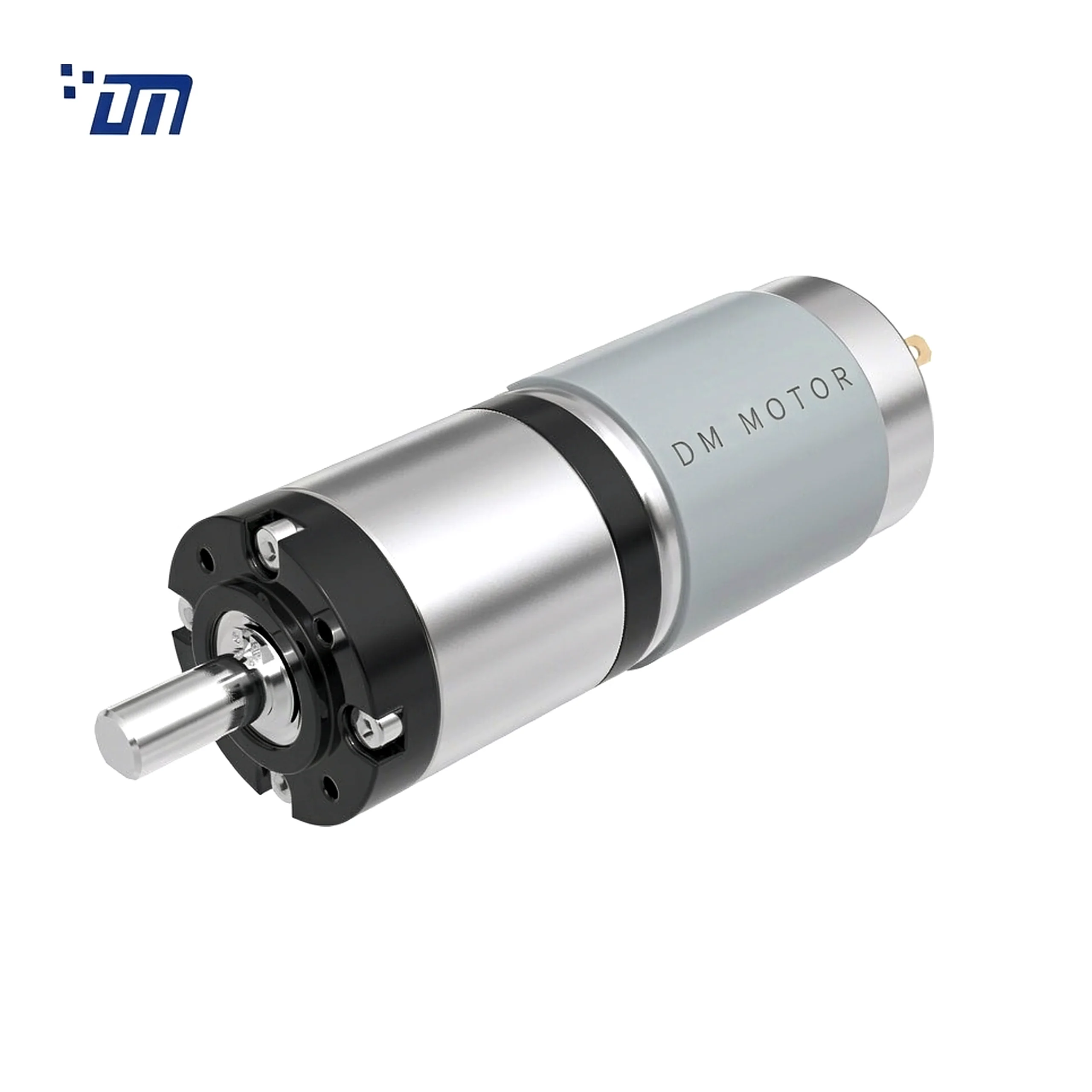 DM-36PM545
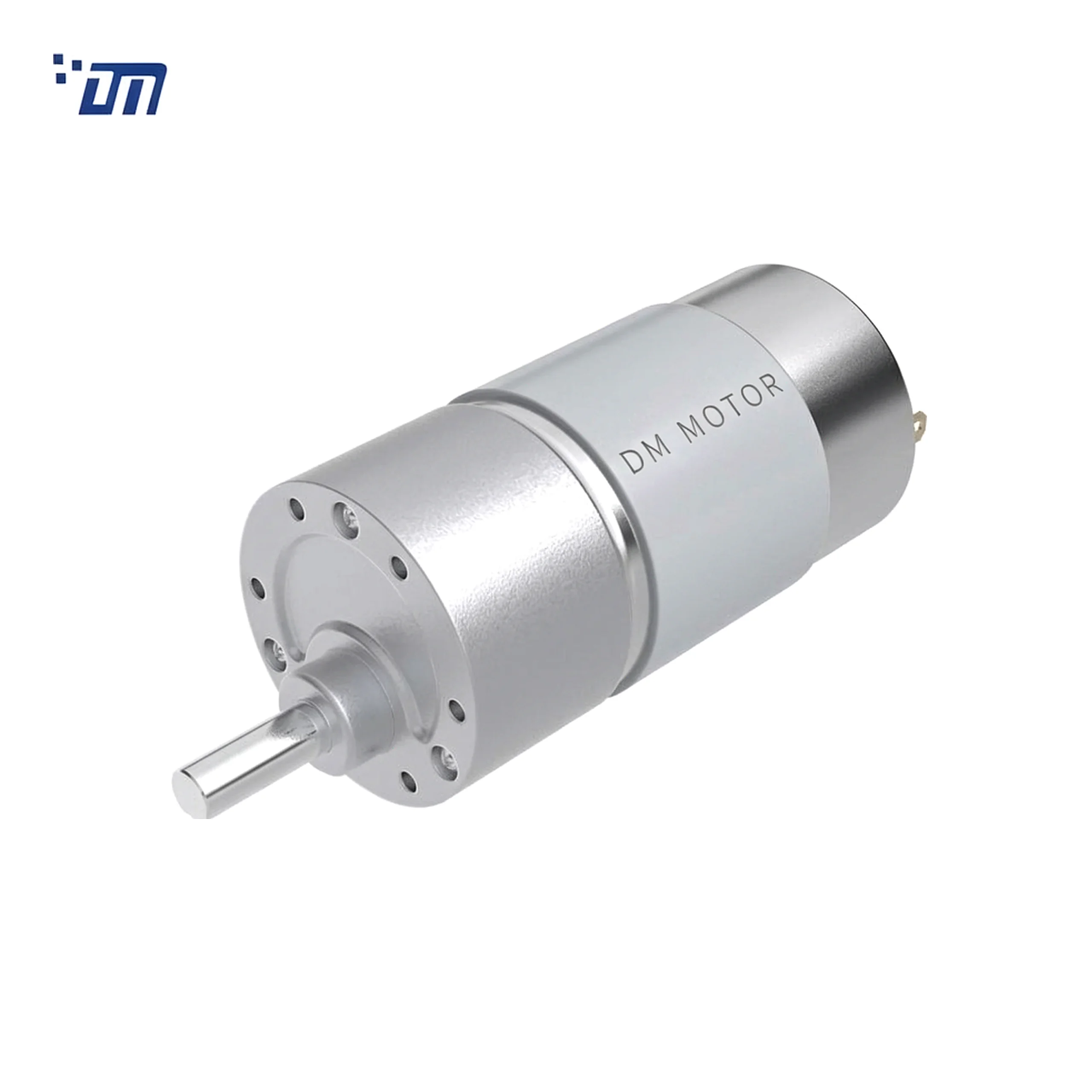 DM-37SM545
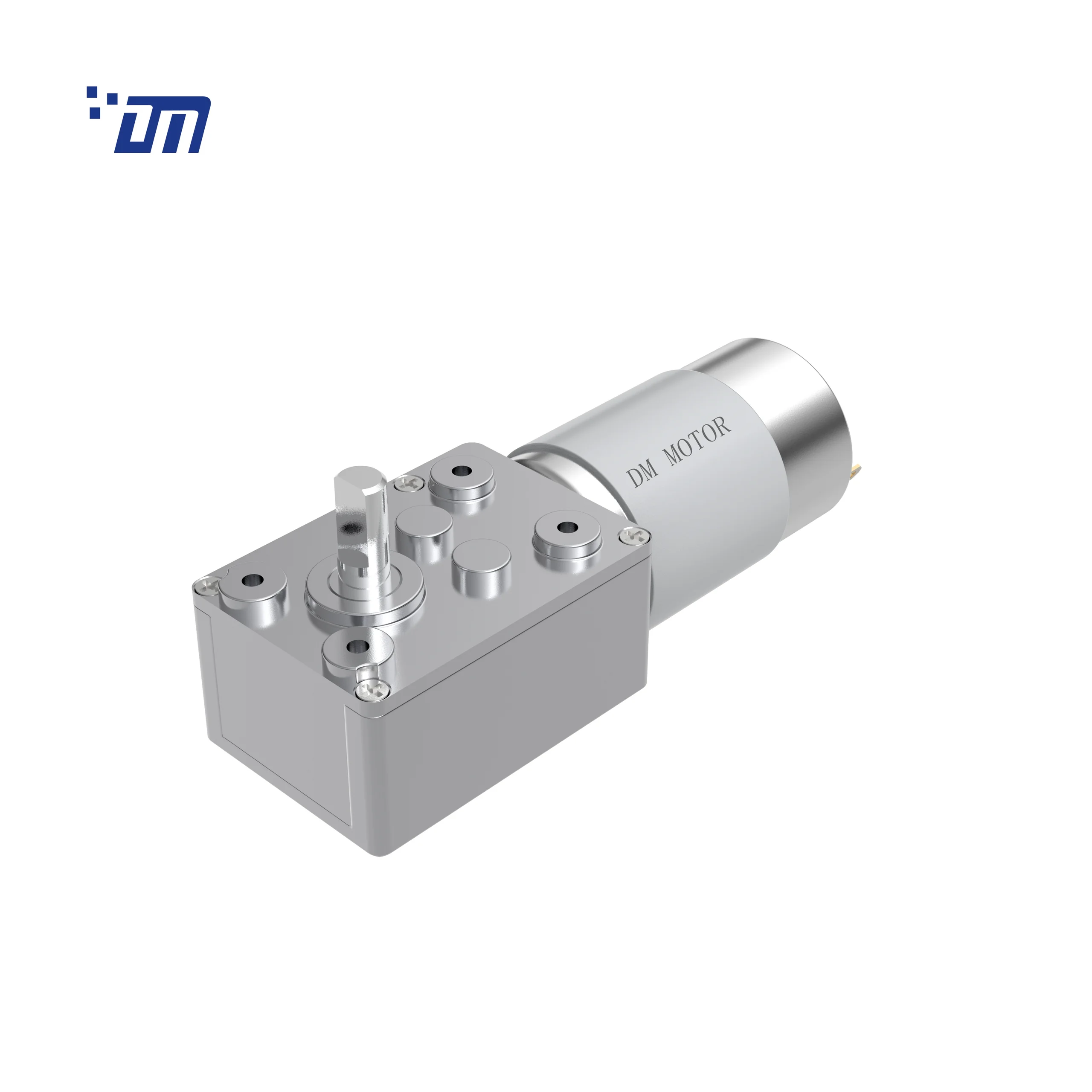 DM-46WM395
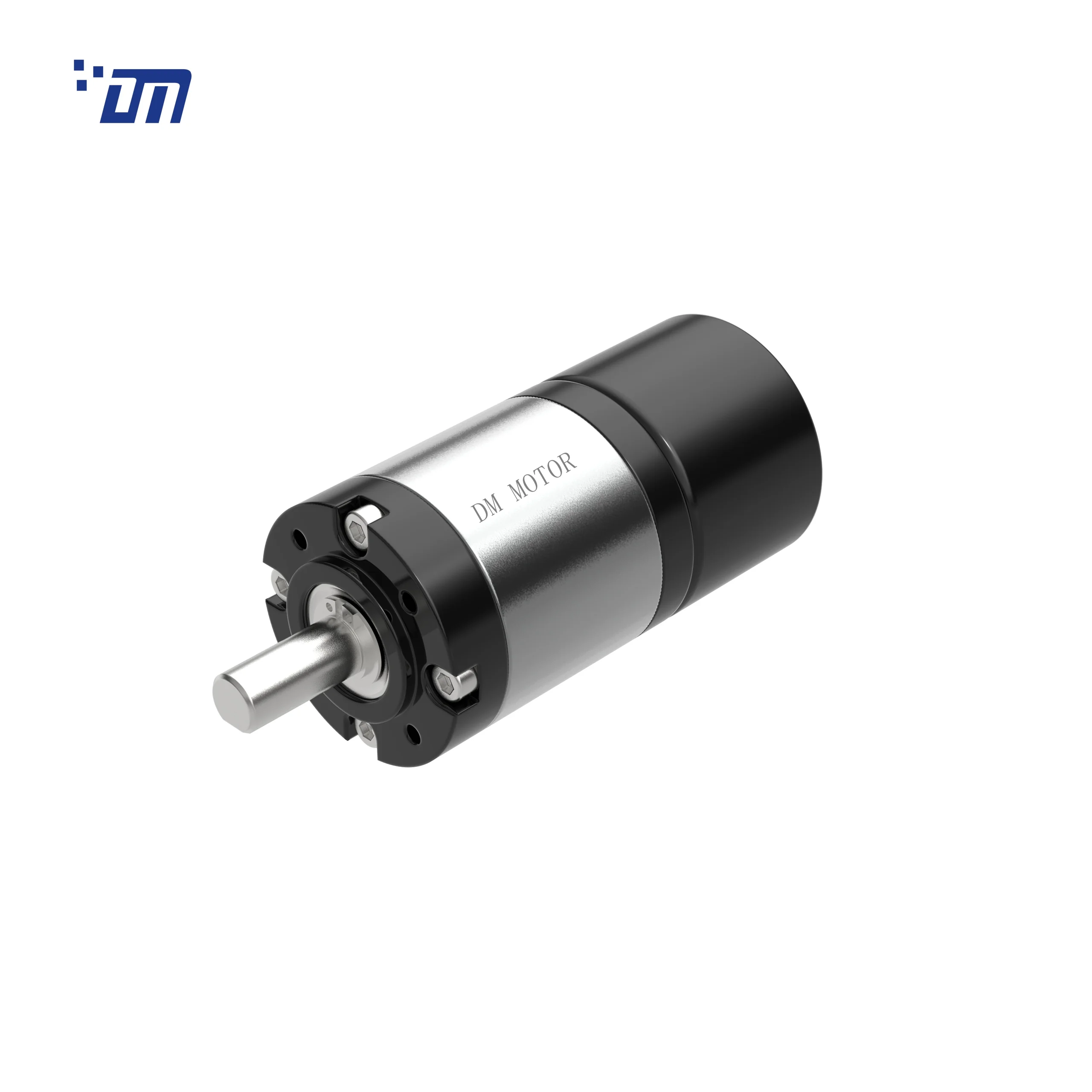 DM-36PBL3626
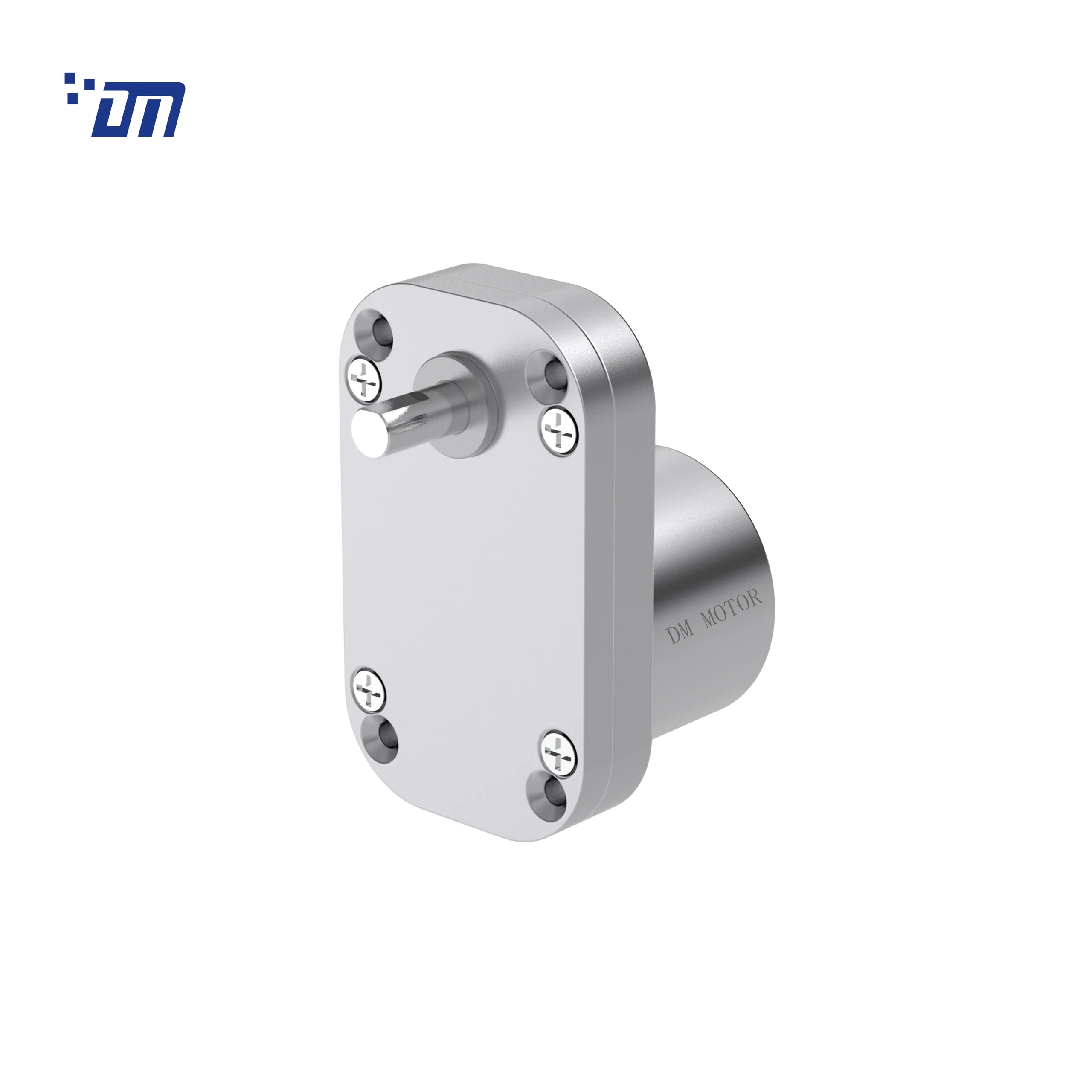 DM-65SM3525