
High-Torque Planetary Gear Motors for AGV & AMR Robotics: A Complete Drive Guide
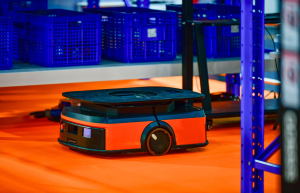
Table of Contents
- The Growing Demand for Reliable AGV & AMR Drive Systems
- What Is a Planetary Gear Motor and How Does It Work?
- Why AGV and AMR Robots Require High-Torque Planetary Gear Motors
- Key Advantages of Planetary Gear Motors in Robotics Applications
- How to Select the Right Planetary Gear Motor for AGV & AMR Systems
- Common Applications of Planetary Gear Motors in Mobile Robotics
- Custom Planetary Gear Motor Solutions for AGV Manufacturers
- FAQ About Planetary Gear Motors for AGV and AMR Robots
- Conclusion
1. The Growing Demand for Reliable AGV & AMR Drive Systems
With the rapid development of smart factories, warehouse automation, and intelligent logistics, AGV (Automated Guided Vehicle) and AMR (Autonomous Mobile Robot) systems have become essential equipment for modern industrial automation.
Unlike traditional conveyor systems, AGVs and AMRs need flexible movement, accurate positioning, smooth acceleration, and continuous operation. The drive system is one of the most critical components that determines robot performance.
Among various motor solutions, high-torque planetary gear motors have become a preferred choice for AGV and AMR manufacturers because they provide:
- High output torque
- Compact structure
- Excellent load capacity
- Low backlash
- High transmission efficiency
- Long service life
A well-designed planetary gear motor allows mobile robots to carry heavier loads while maintaining precise movement control.
2. What Is a Planetary Gear Motor and How Does It Work?
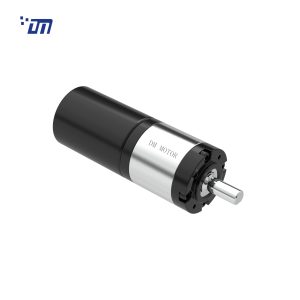
A planetary gear motor combines a DC motor or BLDC motor with a planetary gearbox.
The planetary gearbox consists of:
- Sun gear
- Planet gears
- Ring gear
- Planet carrier
The motor drives the sun gear, which transfers power through multiple planet gears to the output shaft.
Compared with traditional spur gearboxes, planetary gear systems distribute load across multiple gears simultaneously. This design significantly improves torque density and mechanical strength.
The basic advantages include:
- Higher torque output in a smaller size
- Better shock resistance
- Improved efficiency
- Reduced gear wear
These characteristics make planetary gear motors ideal for mobile robots operating under frequent start-stop cycles.
3. Why AGV and AMR Robots Require High-Torque Planetary Gear Motors
AGV and AMR robots often operate in demanding environments such as:
- Warehouses
- Manufacturing plants
- Distribution centers
- Hospitals
- Smart factories
The drive motor must handle:
Heavy Load Transportation
Many AGVs are designed to transport hundreds of kilograms or even several tons of materials.
A high torque planetary gear motor provides sufficient wheel torque to:
- Start under heavy loads
- Climb ramps
- Overcome floor resistance
- Maintain stable movement
Frequent Start and Stop Operations
Unlike conventional machines running at constant speed, mobile robots frequently:
- Accelerate
- Decelerate
- Change direction
- Stop at precise locations
This requires motors with strong dynamic response and mechanical durability.
Planetary gear motors can withstand repeated torque changes without significant performance degradation.
Precise Motion Control
AMRs rely on sensors, controllers, and navigation algorithms for autonomous movement.
A gear motor with:
- Low backlash
- Stable speed output
- Accurate torque control
helps achieve smoother positioning and better navigation accuracy.
4. Key Advantages of Planetary Gear Motors in Robotics Applications
High Torque Density
The biggest advantage of planetary gear motors is their ability to generate high torque from a compact size.
For AGV designs where installation space is limited, a small motor with higher torque output helps engineers achieve:
- Smaller chassis design
- Lower robot weight
- Higher payload capacity
High Transmission Efficiency
A quality planetary gearbox can achieve efficiency levels typically higher than many conventional gear systems.
Higher efficiency means:
- Less energy loss
- Longer battery runtime
- Lower operating temperature
For battery-powered AMRs, energy efficiency directly affects working time.
Low Backlash and Better Position Accuracy
Backlash affects robot positioning accuracy.
Low backlash planetary gear motors provide:
- More accurate wheel control
- Smooth directional changes
- Better path tracking
This is especially important for autonomous robots operating in narrow warehouse aisles.
Strong Mechanical Reliability
AGVs often work continuously for thousands of hours.
Planetary gear structures provide:
- Multiple gear contact points
- Balanced load distribution
- Higher impact resistance
This improves the lifetime of the entire robotic drive system.
5. How to Select the Right Planetary Gear Motor for AGV & AMR Systems
Choosing the correct motor requires considering several engineering parameters.
Required Torque
The required torque depends on:
- Robot weight
- Payload capacity
- Wheel diameter
- Ground condition
- Required acceleration
A higher payload AGV normally requires a higher torque motor.
Engineers should calculate:
- Continuous torque
- Peak torque
- Starting torque
to avoid motor overload.
Speed Requirement
AGV applications usually require relatively low wheel speeds but high torque.
Typical considerations include:
- Traveling speed
- Reduction ratio
- Motor RPM
- Control accuracy
A planetary gearbox allows designers to balance speed and torque by selecting different gear ratios.
Gear Ratio Selection
Common planetary gear ratios include:
- 10:1
- 20:1
- 50:1
- 100:1
Higher reduction ratios provide:
- More torque
- Lower output speed
However, excessive reduction may reduce efficiency and response speed.
Motor Type Selection
Depending on application requirements:
Brushed DC Planetary Gear Motor
Advantages:
- Simple control
- Cost-effective
- High starting torque
Suitable for:
- Small AGVs
- Service robots
- Low-cost automation equipment
BLDC Planetary Gear Motor
Advantages:
- Long lifespan
- Low maintenance
- High efficiency
- Quiet operation
Suitable for:
- Industrial AMRs
- Continuous operation robots
- Medical logistics robots
6. Common Applications of Planetary Gear Motors in Mobile Robotics
Warehouse AGVs
Used for:
- Material transportation
- Pallet handling
- Automated picking systems
Requirements:
- High torque
- Reliable operation
- Accurate movement
Autonomous Mobile Robots (AMRs)
Used for:
- Smart logistics
- Factory transportation
- Inspection robots
Requirements:
- Smooth acceleration
- Low noise
- Precise control
Delivery Robots
Planetary gear motors provide:
- Compact design
- Battery efficiency
- Stable outdoor operation
Industrial Robotic Platforms
Applications include:
- Mobile robot bases
- Inspection vehicles
- Collaborative robot platforms
7. Custom Planetary Gear Motor Solutions for AGV Manufacturers
Every AGV system has different requirements. Standard motors may not always provide the best performance.
Professional motor manufacturers can customize:
Gear Ratio
Optimizing the relationship between:
- Speed
- Torque
- Efficiency
Motor Voltage
Common options:
- 12V
- 24V
- 36V
- 48V
Output Shaft Design
Customization includes:
- Shaft diameter
- Keyway
- Mounting structure
Encoder Integration
For precise navigation, planetary gear motors can integrate:
- Magnetic encoder
- Optical encoder
- Hall sensors
These feedback systems improve:
- Speed control
- Position accuracy
- Autonomous navigation performance
8. FAQ About Planetary Gear Motors for AGV and AMR Robots
Q1: Why are planetary gear motors popular in AGV robots?
Planetary gear motors provide high torque density, compact size, excellent durability, and accurate motion control, making them suitable for heavy-load autonomous robots.
Q2: What is the difference between planetary gear motors and spur gear motors?
Planetary gear motors offer higher torque capacity, better efficiency, and stronger load distribution compared with traditional spur gear motors.
Q3: How do I choose a planetary gear motor for an AMR robot?
Selection depends on:
- Robot weight
- Payload
- Wheel size
- Required speed
- Operating environment
Torque calculation and duty cycle analysis are essential.
Q4: Can planetary gear motors be customized for AGV applications?
Yes. Manufacturers can customize voltage, gear ratio, shaft design, encoder feedback, and mounting dimensions according to robot requirements.
Q5: Are BLDC planetary gear motors better for industrial AMRs?
For long-term continuous operation, BLDC planetary gear motors usually provide higher efficiency, longer lifetime, and lower maintenance compared with brushed motors.
As AGV and AMR robotics continue to expand in smart manufacturing and logistics automation, the demand for reliable drive systems is increasing.
High-torque planetary gear motors for AGV and AMR robotics provide the ideal combination of:
- High torque output
- Compact size
- Precision control
- Long service life
- Excellent efficiency
For robot manufacturers looking to improve mobility, payload capability, and operational reliability, selecting the right planetary gearbox motor is a critical engineering decision.
A properly designed planetary gear motor solution can significantly improve the overall performance and competitiveness of next-generation autonomous robots.
This article’s information is shared by DongMing Motor (https://szdmmotor.com/)