

Electric Standing Desk
 Nowadays, long time working, studying by siting, human muscles, and bones are under long-term tension, it is easy to cause sub-health symptoms such as cervical spondylosis, frozen shoulder, Muscle aches and pain, Varicose veins, and decreased vision.
This prolonged sitting gets an unavoidable comparison to smoking because of having similar health-hazardous effects. So, reducing sitting hours can be the ideal method to protect your health from harm. A sit-stand desk offers the best solution by allowing people to switch their positions between sitting and standing.
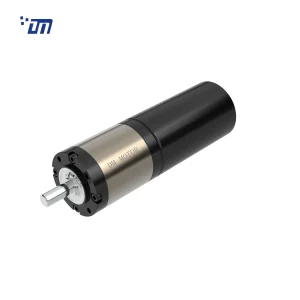
Dongming’s DC Gearbox Motor Solution for Smart Standing Desks
With the help of a gear motor, electric standing desks become multi-functional. With just a press of a button, desks can easily switch between standing and sitting. There are many intelligent sit & stand desks currently available on the market, but they’re met with problems such as High Noise, insufficient load-bearing, limited switchable gears (limited lifting range), short service life, high power consumption, etc. Desks fail to lift smoothly if the speed is not well controlled.
To solve various issue of market’s motor solution for electric Sit-Stand Desk, DONGMING engineers team improve and launch our intelligent electric standing desk motor solution. We recommend use our planetary gear motor series and worm gear motor series.
Below: the engineering behind this application, and which of our frames cover it.
A standing desk is a lifting problem with a safety problem attached
Every height-adjustable desk is specified by its lift capacity, and every desk that hurts someone is a safety failure rather than a capacity failure. The motor has to lift a known load, and it also has to stop instantly when a child, a chair or a cable is under the frame. Those two requirements pull at different parts of the drive train, and a design that only satisfies the first is not finished.
The second structural fact is that most desks have two or three legs driven from one controller. Uneven leg speeds show up as a wobbling desktop and, over a year, as a bent frame. Synchronisation is a motor-and-encoder question before it is a software question.
Lift force is easy; self-locking is what costs money
Lifting 100 kg on a lead screw is a modest torque requirement, and almost any 42 mm planetary frame will do it. What changes the specification is what happens when the desk is loaded and the motor is off. A screw-driven column will hold on friction alone. A direct-drive or low-ratio arrangement will not, and needs a brake.
The other number that gets missed is the anti-collision response. Detecting an obstruction means watching current or encoder deviation and stopping within a few millimetres of travel. A gearbox with high backlash makes that detection late, because the motor moves before the desktop does. Low backlash is a safety parameter on this application, not a comfort parameter.
What we design against on lifting columns
- Holding without power — self-locking ratio, or a brake, decided explicitly.
- Low backlash — so anti-collision triggers at the desktop, not after the slack is taken up.
- Matched speed across legs — encoder feedback on each leg, with the ratio known exactly.
- Starting torque at low temperature — an office at 15 degrees in the morning is a real load case.
- Noise in a quiet room — the desk is often in a meeting room or a shared office, and 55 dB is a different product from 65 dB.
- Duty cycle — short bursts, high starting current; the thermal limit is in the drive, not the motor.
Failure modes on height-adjustable desks
Desktop drifts down overnight. Self-locking was assumed and not verified. Ask for the back-drive torque at the chosen ratio and check it against the loaded column.
Anti-collision does not trigger. Backlash, or a current limit set too high to notice the obstruction. Both are testable at sample stage with a bathroom scale and a stopwatch, before tooling.
Legs go out of sync. Encoder counts per millimetre differ between legs because the ratios were not matched, or the controller is counting motor revolutions without a known ratio.
Motors for lifting columns
The 42 mm frame with a high-ratio planetary stage is the usual choice because it reaches the holding torque without a brake. Figures are from the current datasheets.
- DM-42PBL4275 — 42 mm, 12-24 VDC, 4-800 RPM, 18-98 kg.cm
- DM-95SM545 — 37.6 mm, 12-24 VDC, 2.5-137 RPM, 1-100 kg.cm
Where a brake is preferred over a high ratio — for example when the desk must be movable by hand during installation — the lower-ratio option is the better fit, and the brake becomes part of the specification.
Questions from desk manufacturers
Can you match three motors to within a speed tolerance? Yes, and it is worth doing at the sample stage: send us the target tolerance in mm per second at the desktop and we will confirm which encoder and ratio reach it.
What is the back-drive torque at your highest ratio? We will quote it for the specific ratio rather than the frame, because that is the number that decides whether you need a brake.
Can the motor take the gearbox load of a two-stage column? Send the column geometry and the rated load; the answer depends on the screw lead and the pulley, not on the motor alone.
Related Products
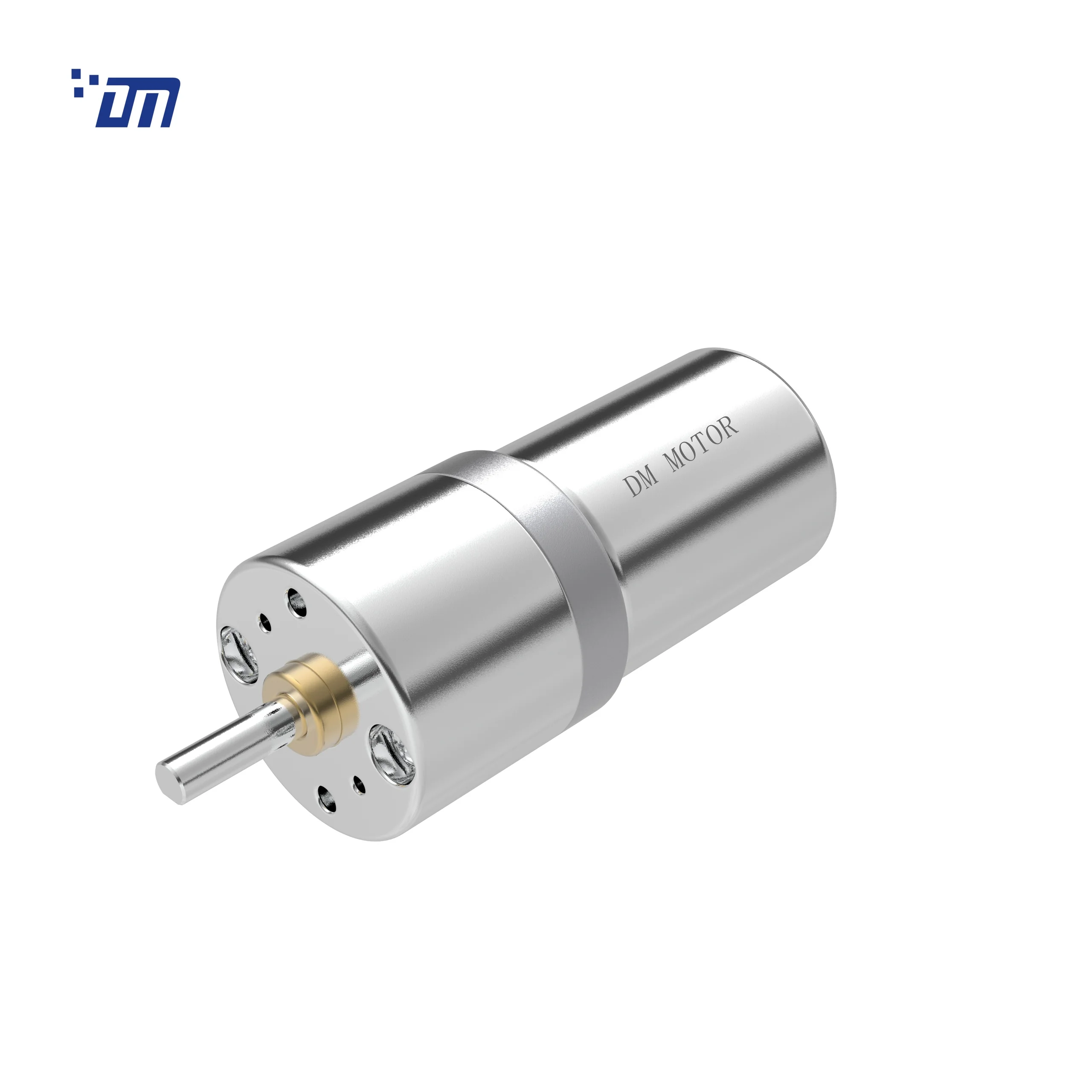 DM-27SM370
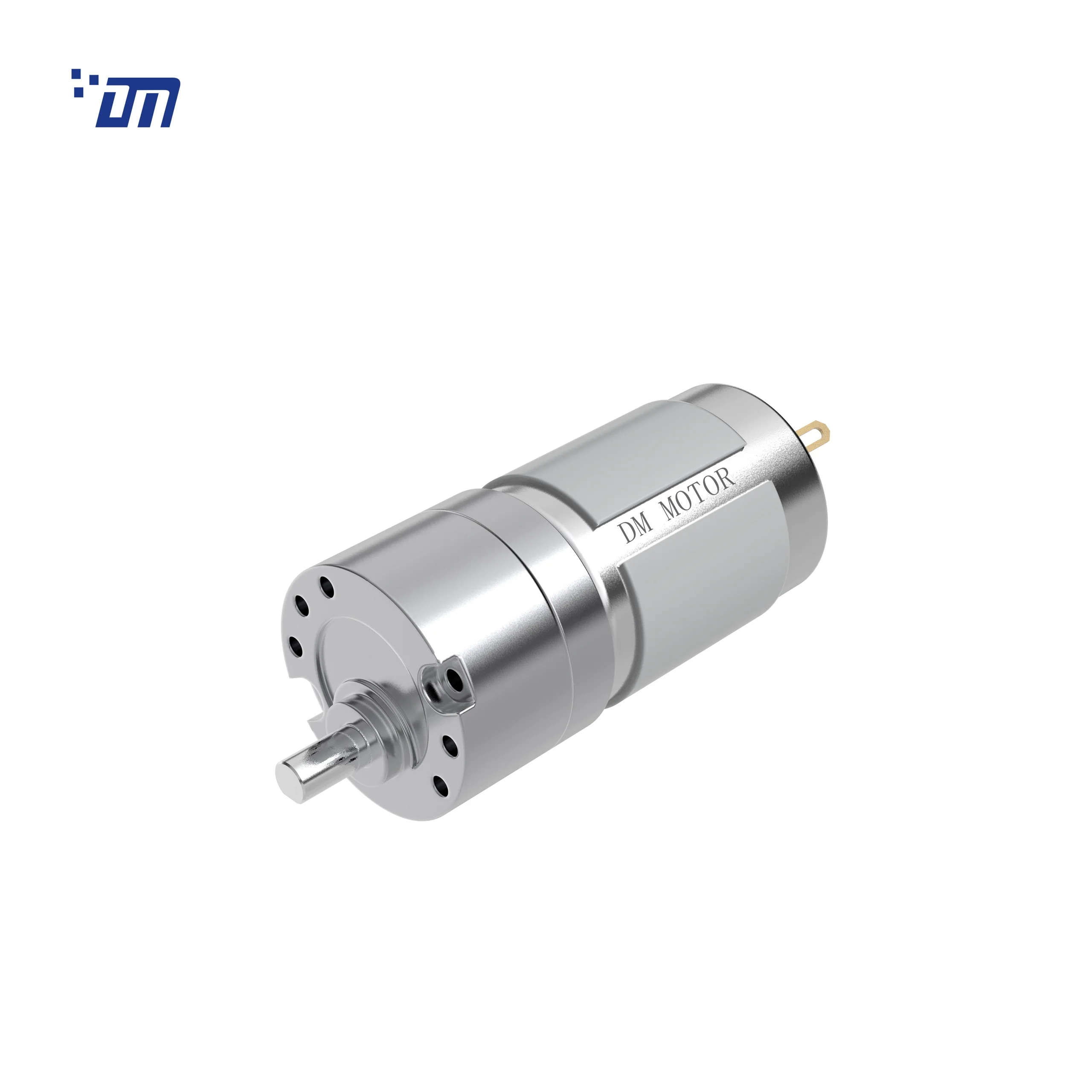 DM-30SM385
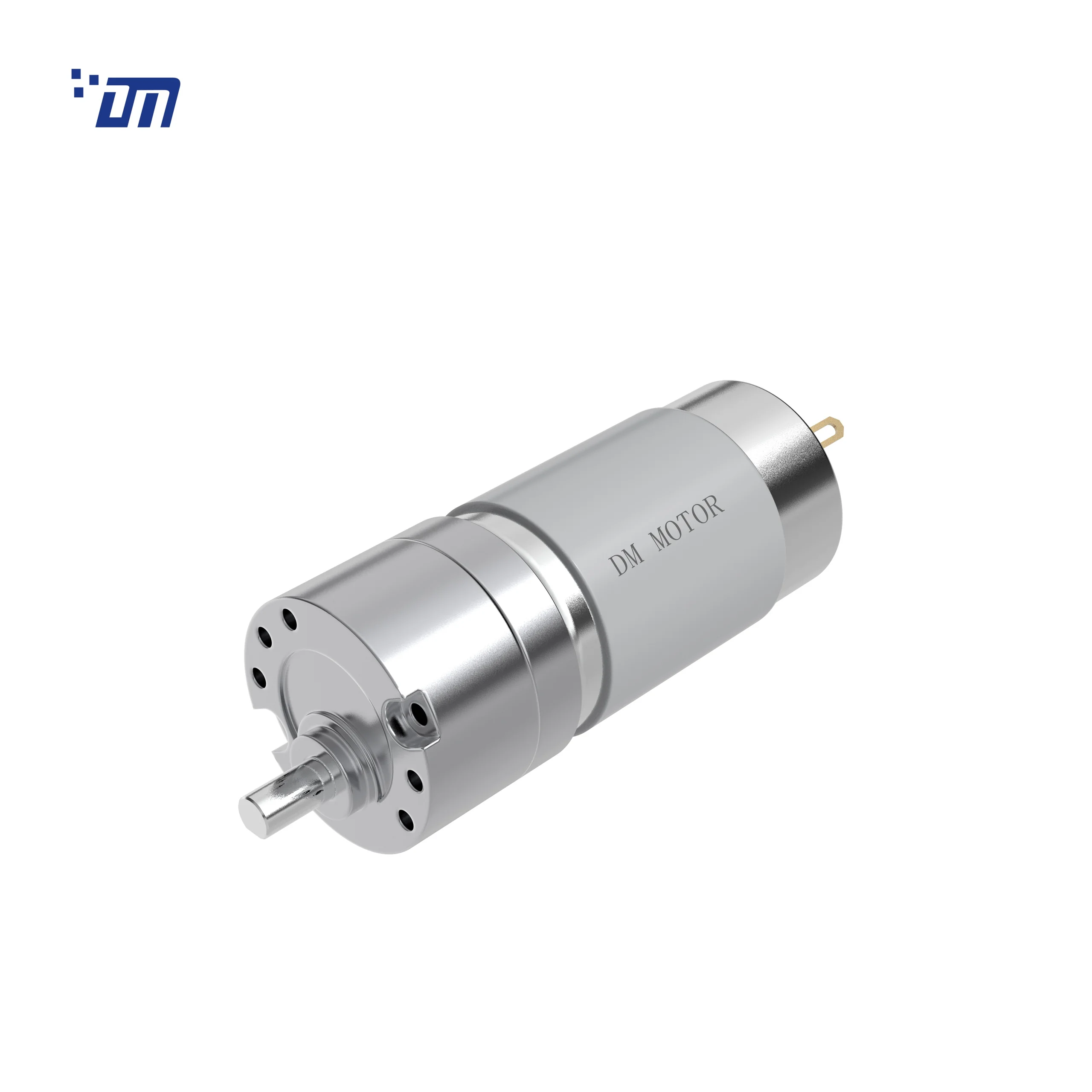 DM-30SM395
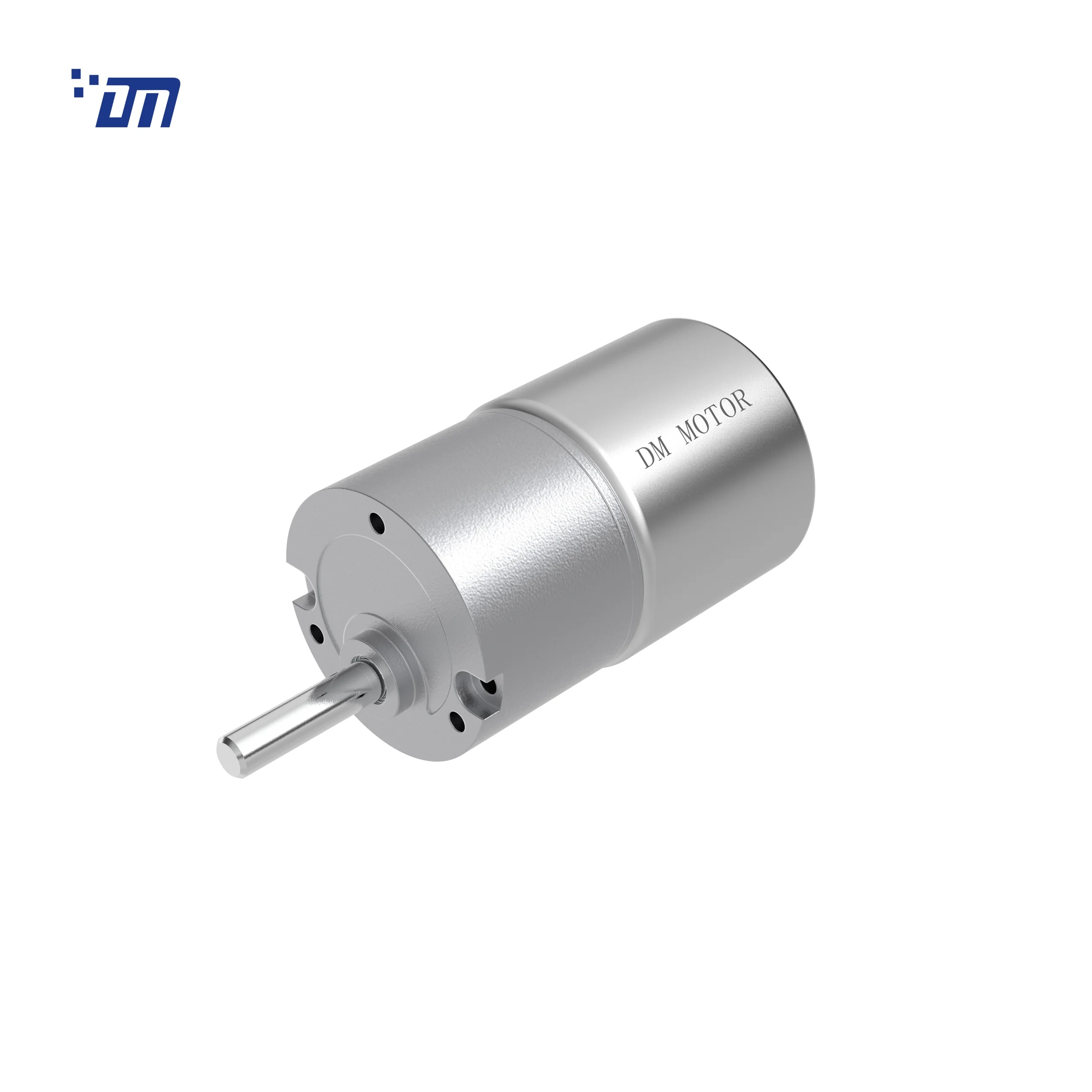 DM-33SM3530
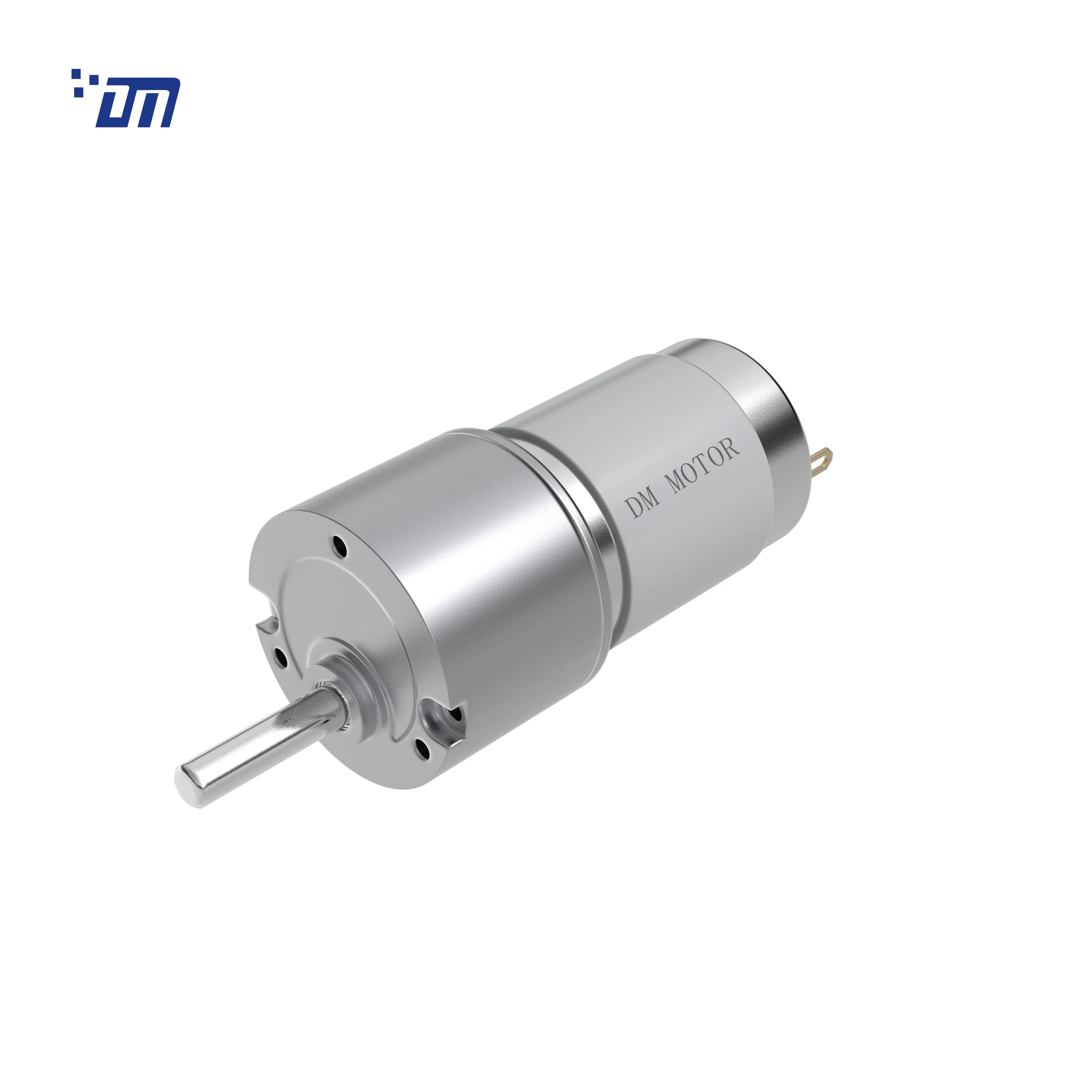 DM-33SM385