

ATM Machine
How the application works
Cash handling module: Identification and counting through sensors to ensure the accuracy and security of transactions.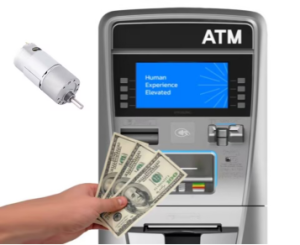
User interface: Touch screen or key input device for entering transaction instructions, and printer for printing transaction receipts.
Security system: ATMs are equipped with a variety of security measures to prevent fraud and theft.
Network connection: To process transaction requests and update account information in real time.
How our motors work on the product
Banknote transport system: Transport belt which smoothly and quickly transfer banknotes from the storage module to the cash outlet or cash inlet.
Banknote recognition module: Drives the sensors and scanning devices to ensure accurate identification and counting of banknotes.
Printer module: Drives the paper transport system of the printer to ensure that transaction receipts can be accurately printed and output.
Recommended motor models
DM-37RS545: Moderate torque and speed, suitable for banknote transport systems.
DM-46SW395: High torque and low speed, very suitable for banknote recognition modules.
DM-28RPBL2847: Low noise and high efficiency, suitable for printer modules.
Advantages of our motors used in this product
High precision and reliability: Strict quality control maintain stable performance, reducing maintenance and replacement costs.
Low noise operation: Advanced design and optimized gearbox maintain low noise level and improve user experience.
Compact design and high efficiency: Reduce energy consumption of ATM machines and meet environmental protection requirements.
Customized solutions: According to the adjustment of motor parameters and design, meet the requirements of different models.
Below: the engineering behind this application, and which of our frames cover it.
An ATM motor is specified by cycle count, not by torque
The mechanism inside an ATM is unremarkable in engineering terms: a shutter that opens, a dispenser that pushes a stack of notes, a card reader that pulls a card in and out, a receipt printer. None of these need much torque. What makes the application difficult is that each one will be asked to do its small movement several hundred thousand times, in a public place, without maintenance, and a failure is not an inconvenience but a security and reputational event.
So the specification here is dominated by life, repeatability and fault detection. A motor that is 20 percent bigger than needed and never stalls is worth more than an optimised one that jams once.
The shutter is the mechanism that decides the design
A shutter has three requirements that conflict. It must open fast, because the customer is standing there. It must close against an obstruction without injuring a hand, which means it needs enough torque to complete the movement but a stall detection that stops it. And it must hold closed when idle, against someone trying to force it.
That combination usually points to a geared motor with a clutch or an overload detection in the drive, plus enough holding torque to resist manual force without a separate lock. Sizing on opening torque alone gives a shutter that cannot be forced but also cannot detect a hand.
What we design against on self-service mechanisms
- Cycle life in the hundreds of thousands — the gearbox first stage is the wear item, not the brushes.
- Stall detection without damage — breaking torque known, so the drive can limit below it.
- Holding torque when idle — resisting manual force with the drive disabled.
- Behaviour at temperature extremes — an outdoor kiosk in winter needs breakaway torque at -20, not at 20.
- Dust and note-paper debris — sealing on the dispenser and transport motors.
- Audible noise — a shutter that clunks sounds broken even when it is working.
Failure modes on ATMs and kiosks
Note double-feed or skew. The transport motor is usually blamed; the real cause is often a roller that has hardened, changing the load the motor sees. Specify a margin so the motor tolerates a worn roller rather than matching the new one.
Shutter stalls in cold weather. Breakaway torque rises sharply at low temperature and the grease stiffens. This is a lubricant and margin question, and it is worth stating the operating temperature range at enquiry.
Card reader jams. Small transport motor with too little stall margin. A clutch or a current-limited drive turns a jam into a retry instead of a service call.
Frames used in self-service mechanisms
Small frames for card and receipt transport, mid-size frames for shutters and dispensers. Figures from the current datasheets.
- DM-37SM545 — 37 mm, 12-24 VDC, 2-700 RPM, 1-27 kg.cm
- DM-46WM395 — 6-24 VDC, 2-250 RPM, 1-30 kg.cm
- DM-36PM545 — 36 mm, 12-24 VDC, 3-1500 RPM, 1-50 kg.cm
Where the shutter has to hold against manual force, a worm frame gives more holding torque for the same motor size, because the ratio does the work rather than a brake.
Questions from kiosk and ATM builders
What cycle life can you support? Give us the number of cycles, the load and the ambient, and we will quote life against those conditions rather than at rated torque.
Can the mechanism detect a stall before damage? Yes, if the drive limits current below the gearbox breaking torque. We will give you that figure for the ratio you choose.
Do you supply the motor and gearbox separately for spares? Both ways — a matched unit for new builds, and a separate gearbox if you keep service stock of motors.
Related Products
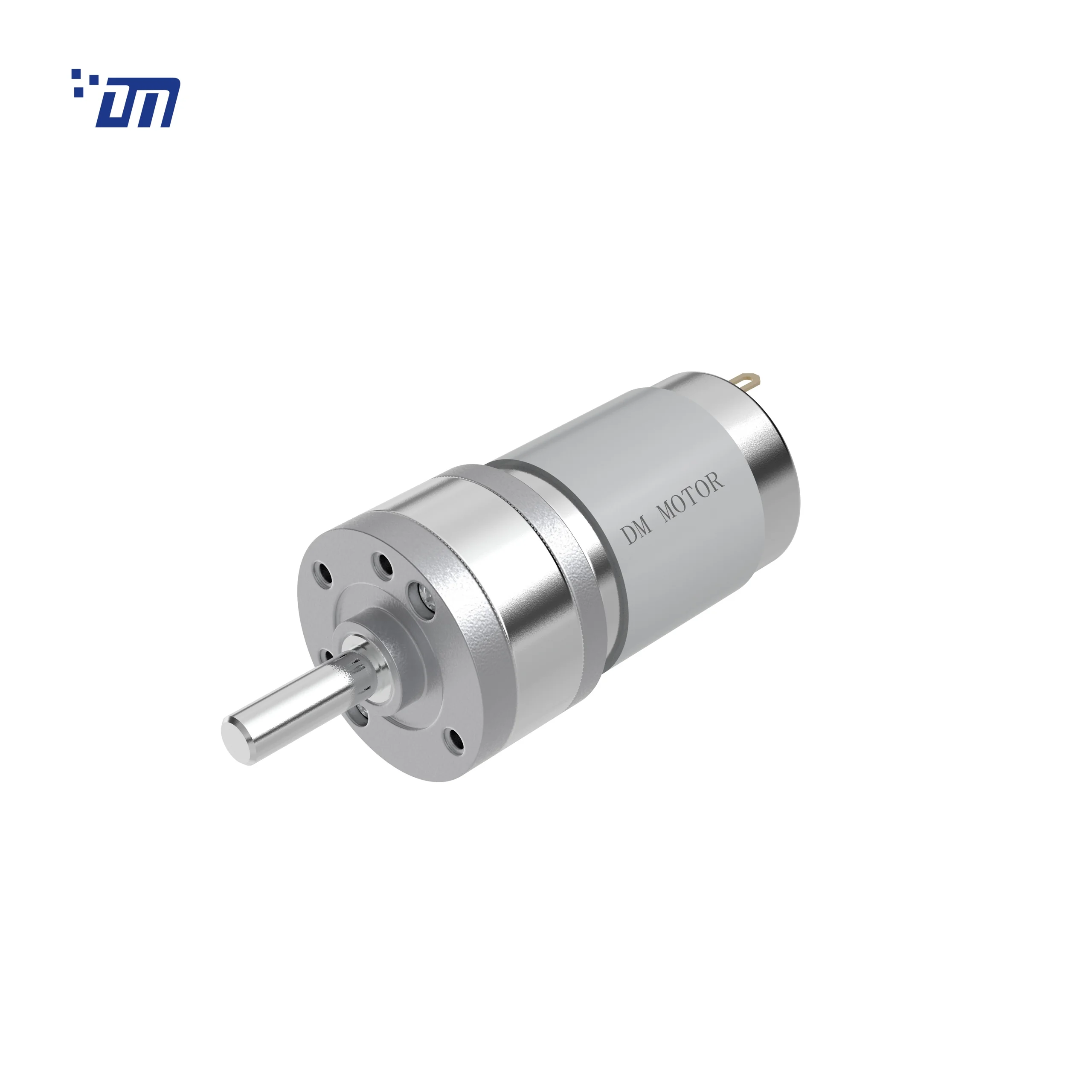 DM-32SM385
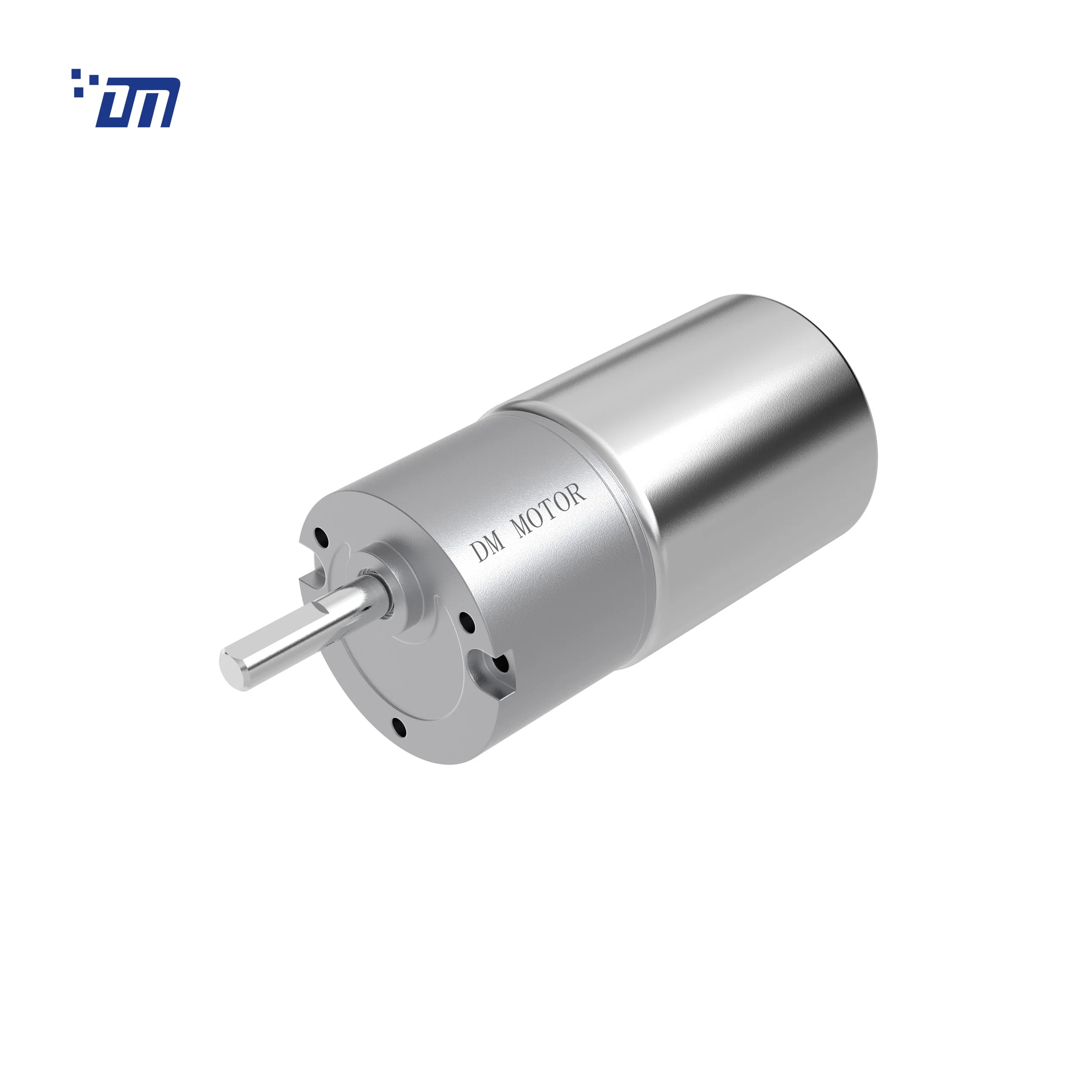 DM-33SM3540
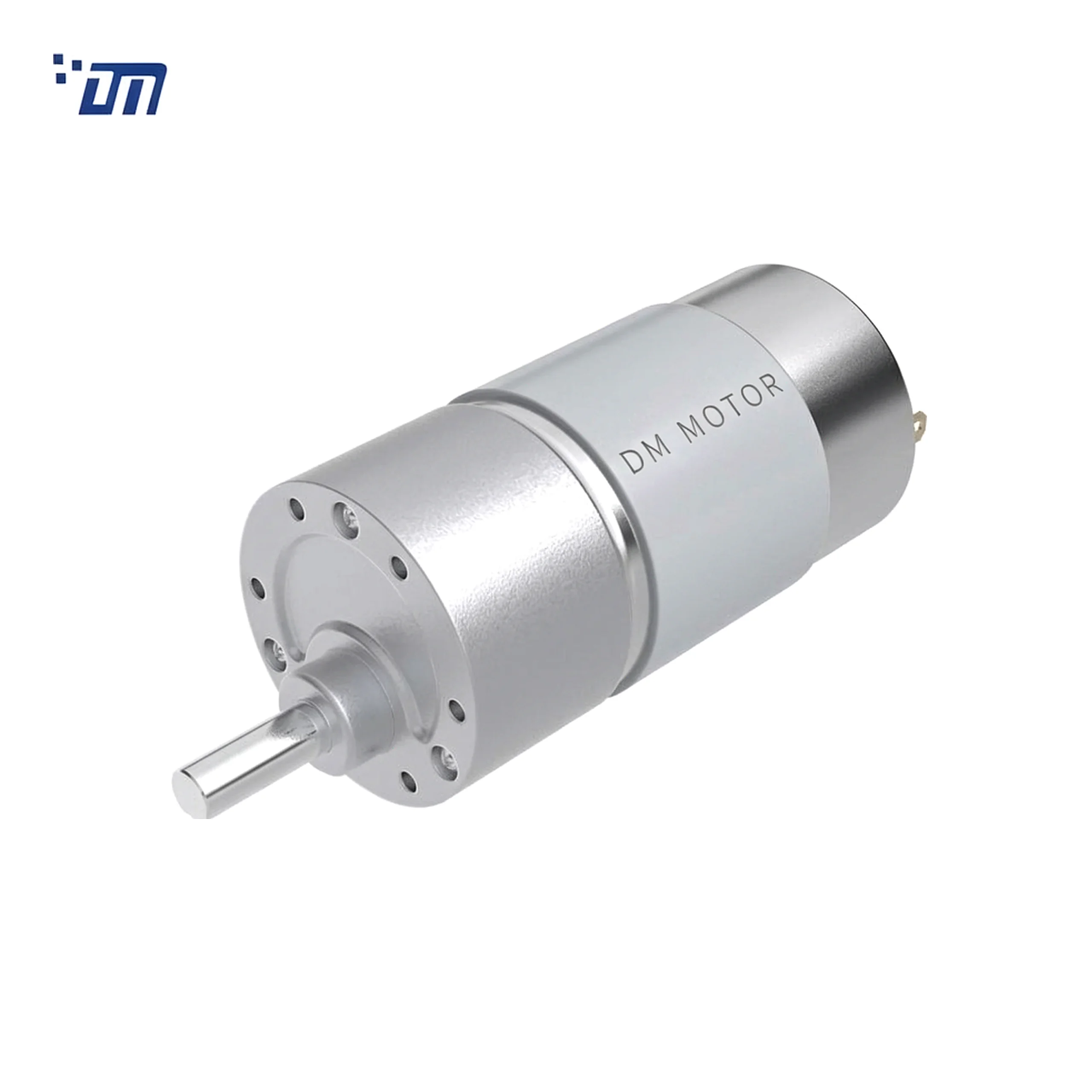 DM-37SM545
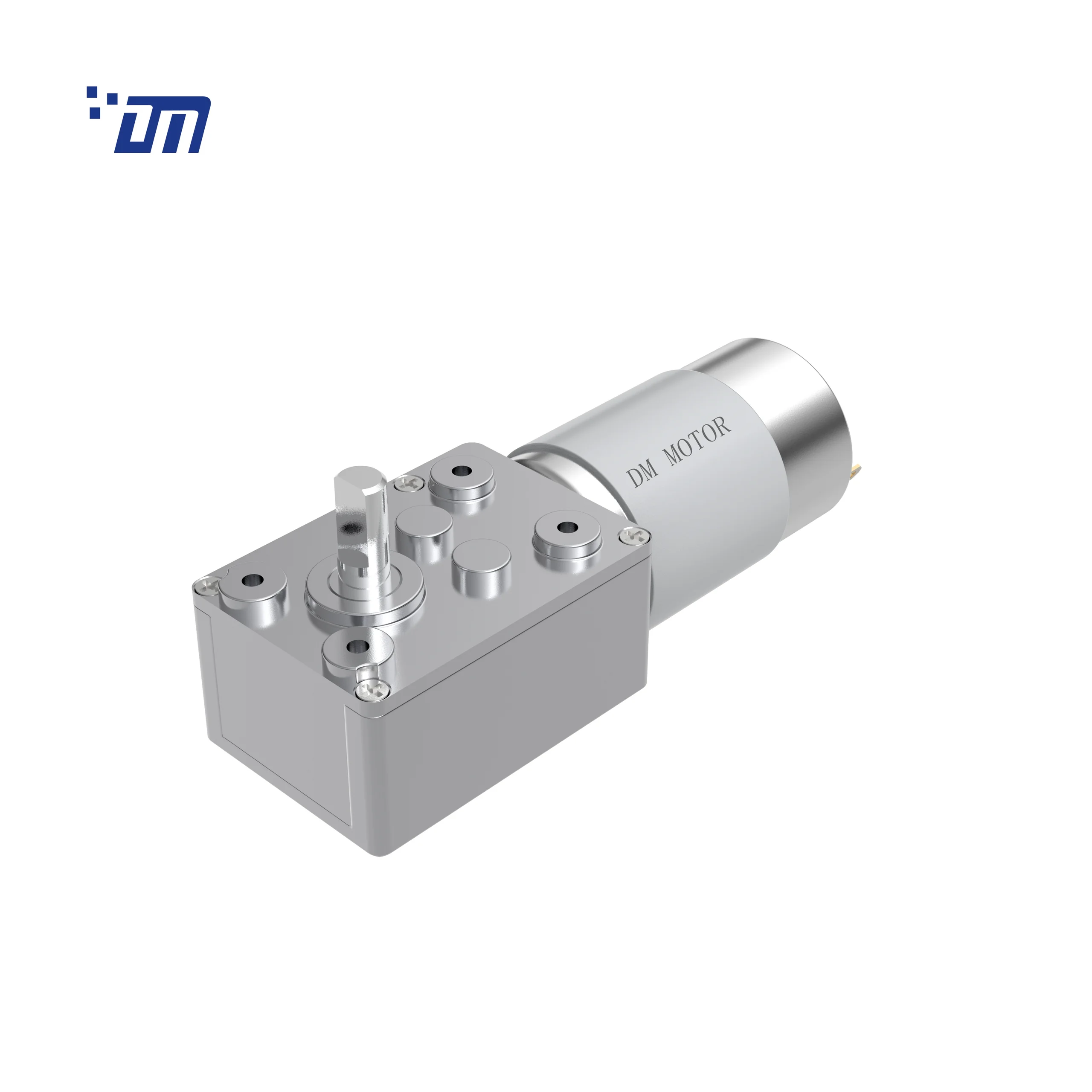 DM-46WM395
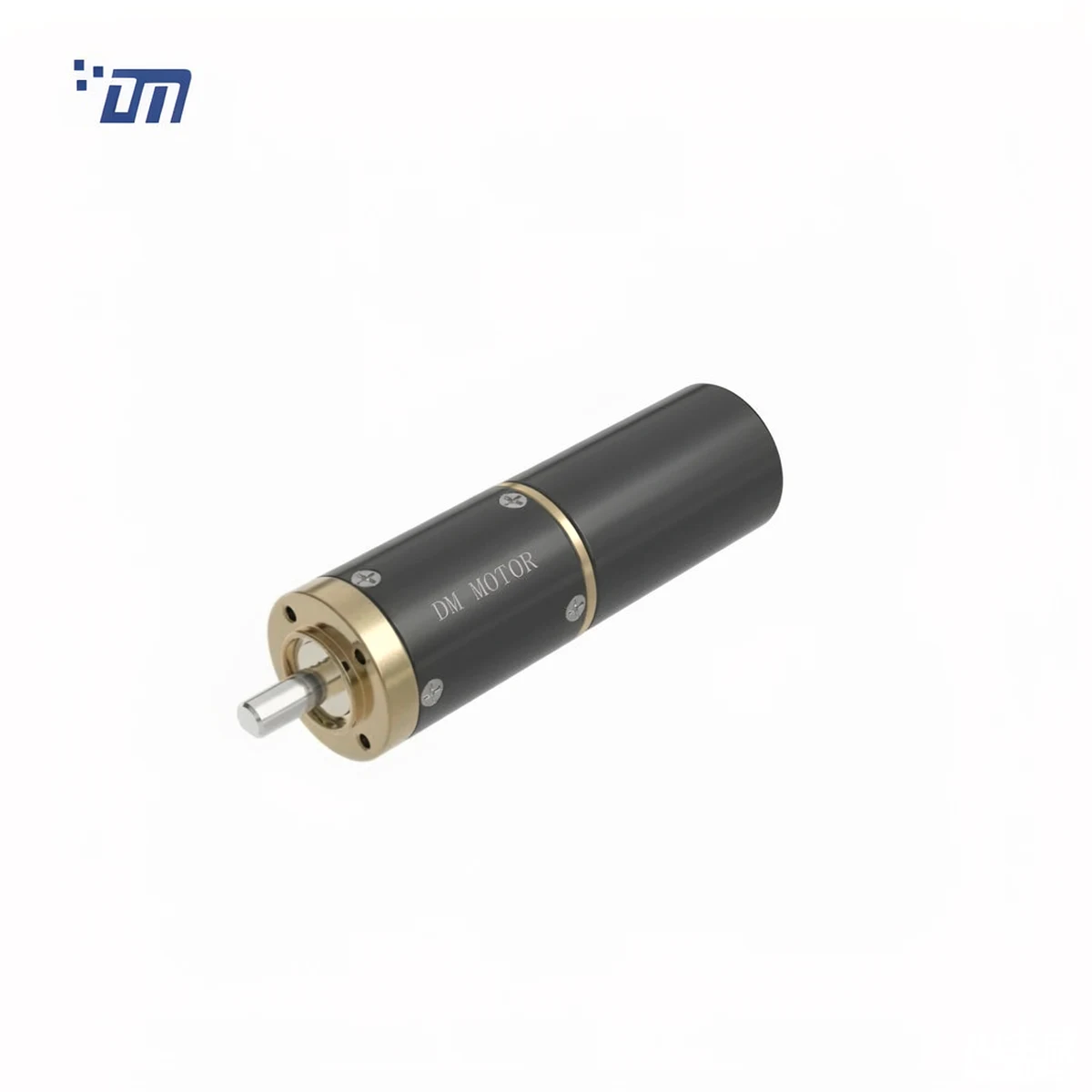 DM-28PBL2847