
DC Planetary Gear Motor Manufacturer
DC Planetary Gear Motors,
16 mm to 56 mm
Nine frame sizes with metal planetary gearboxes — ratios from 3.7:1 to 1910:1, output torque up to 5.9 N·m (60 kgf·cm), 3–24 VDC. Change the shaft, ratio, winding, cable or encoder for your build. Send the torque and envelope; our engineers reply within 15 hours.
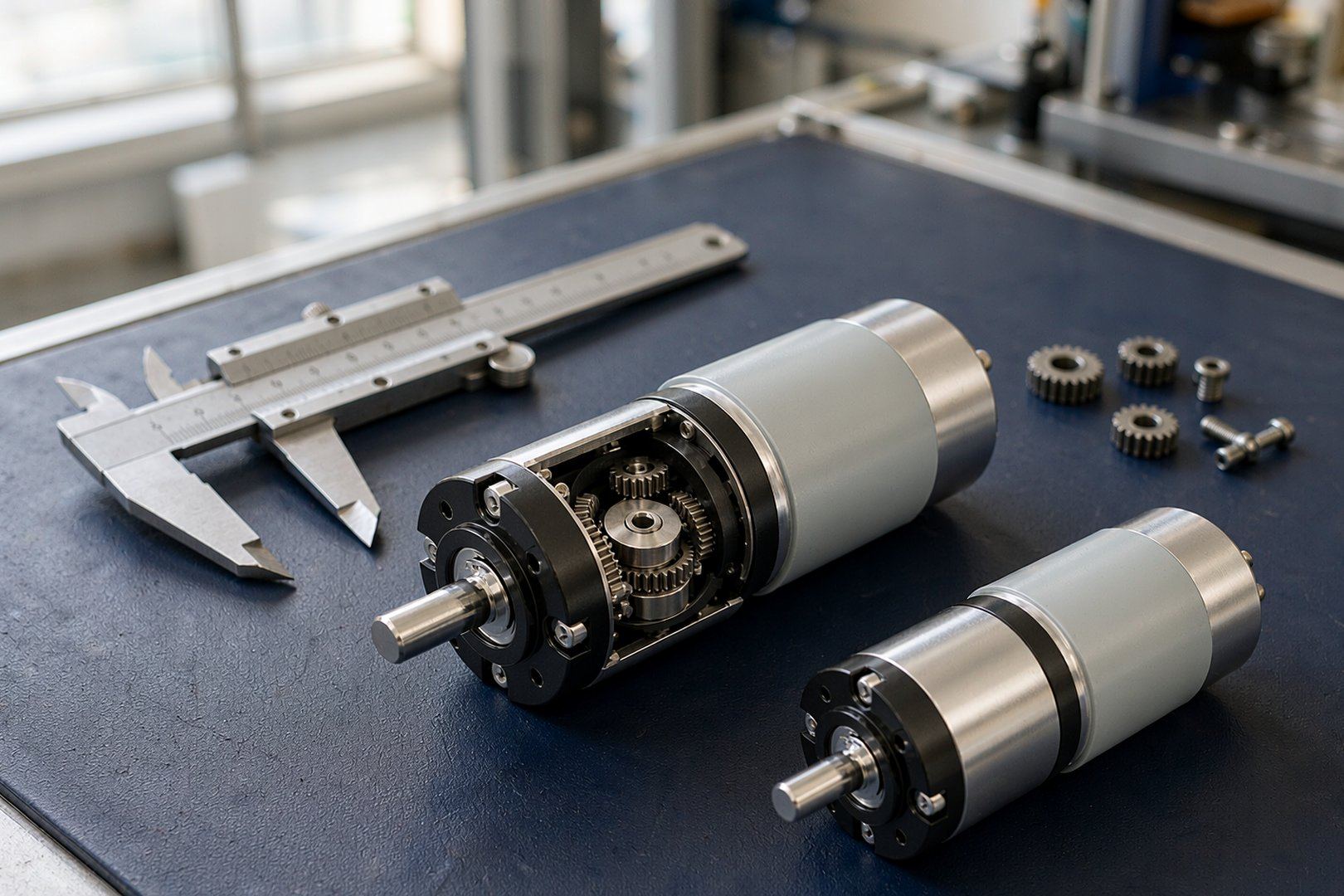
What these gear motors can actually do
Six numbers decide whether a planetary gear motor fits your machine. These are the ranges our standard frames cover — anything outside them is a custom build, not a rejection.
Six of the nine frames we build every week
Each card is a real standard model, not a render. Start from the closest frame, then change the ratio, shaft, winding or cable — the gearbox stays, the interfaces move.
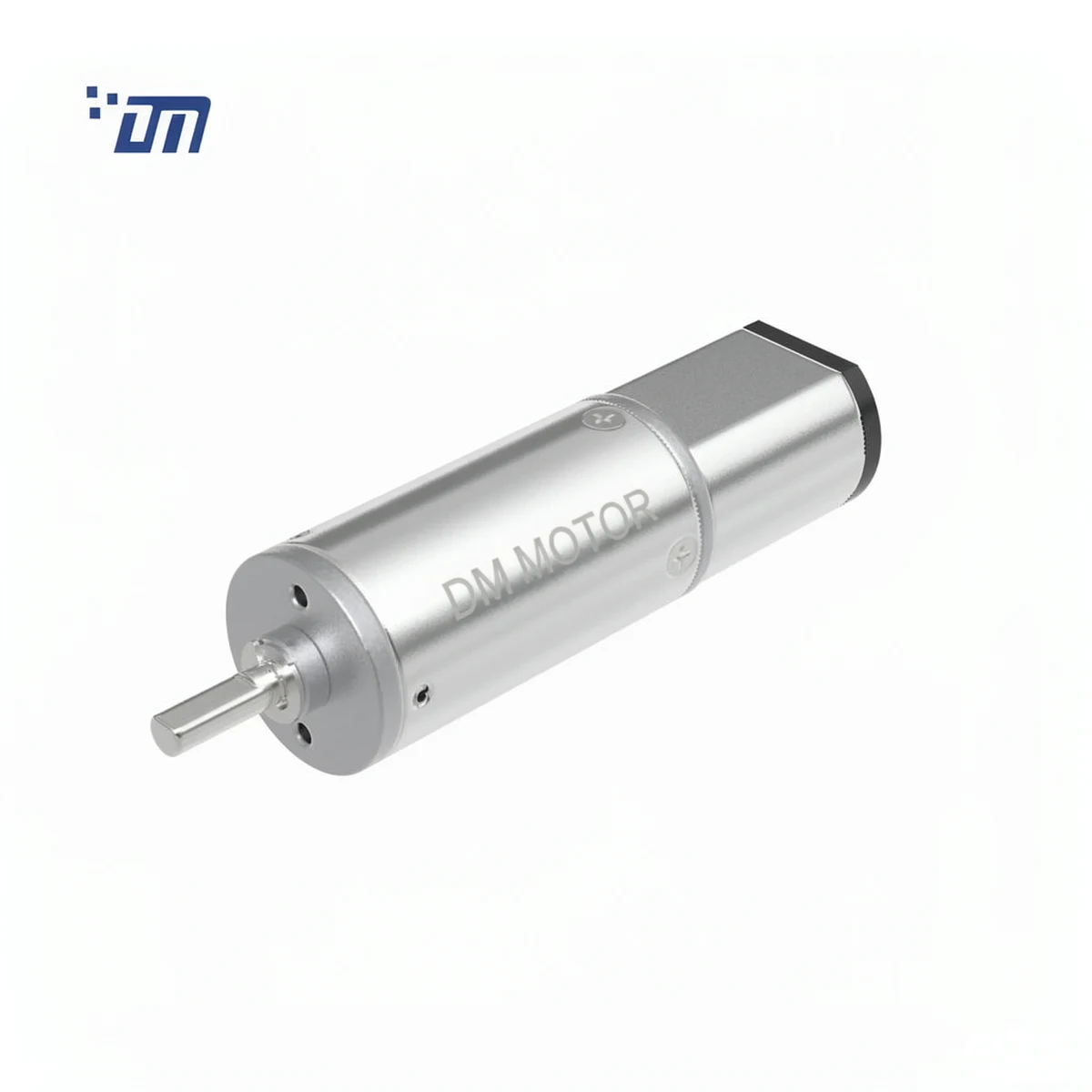
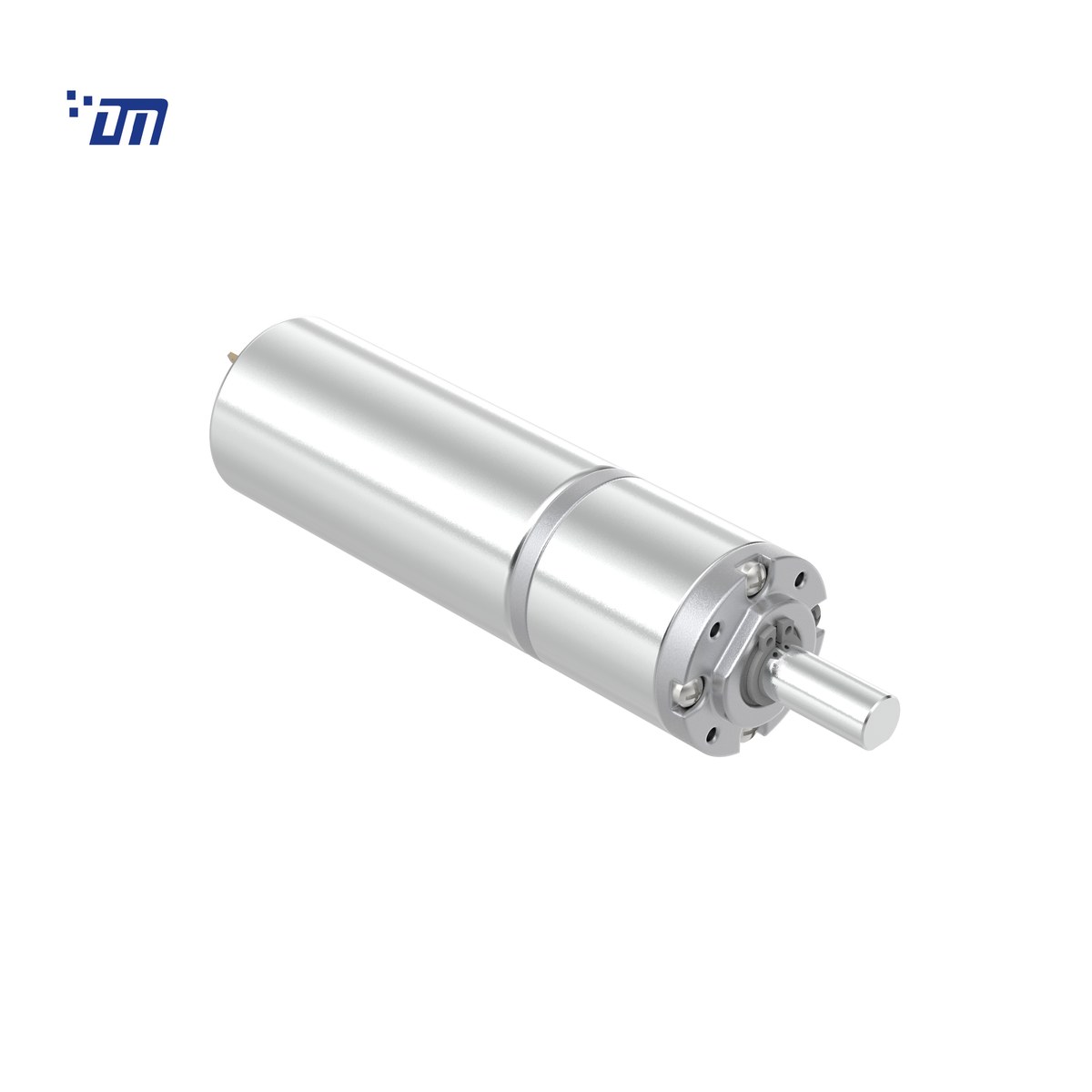
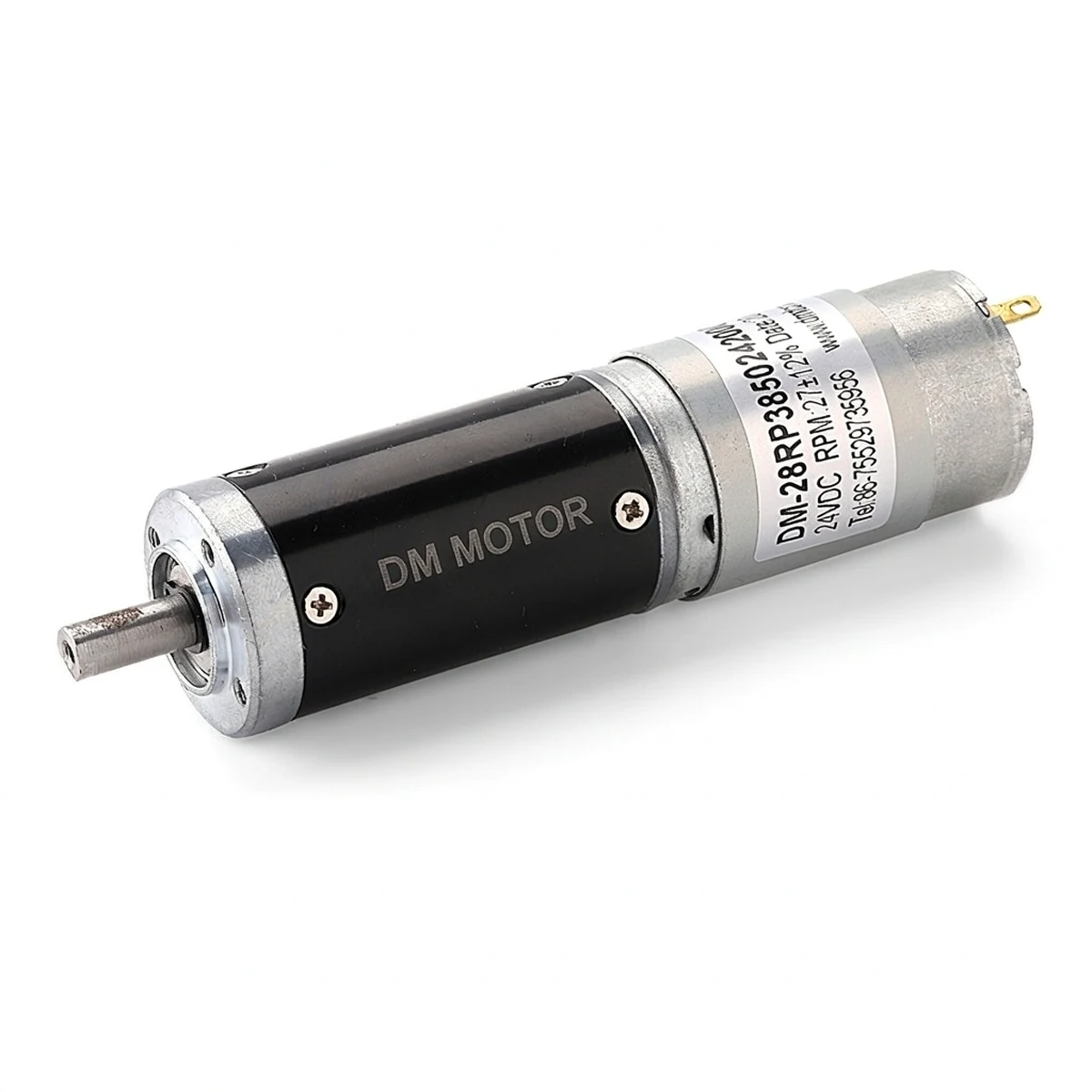
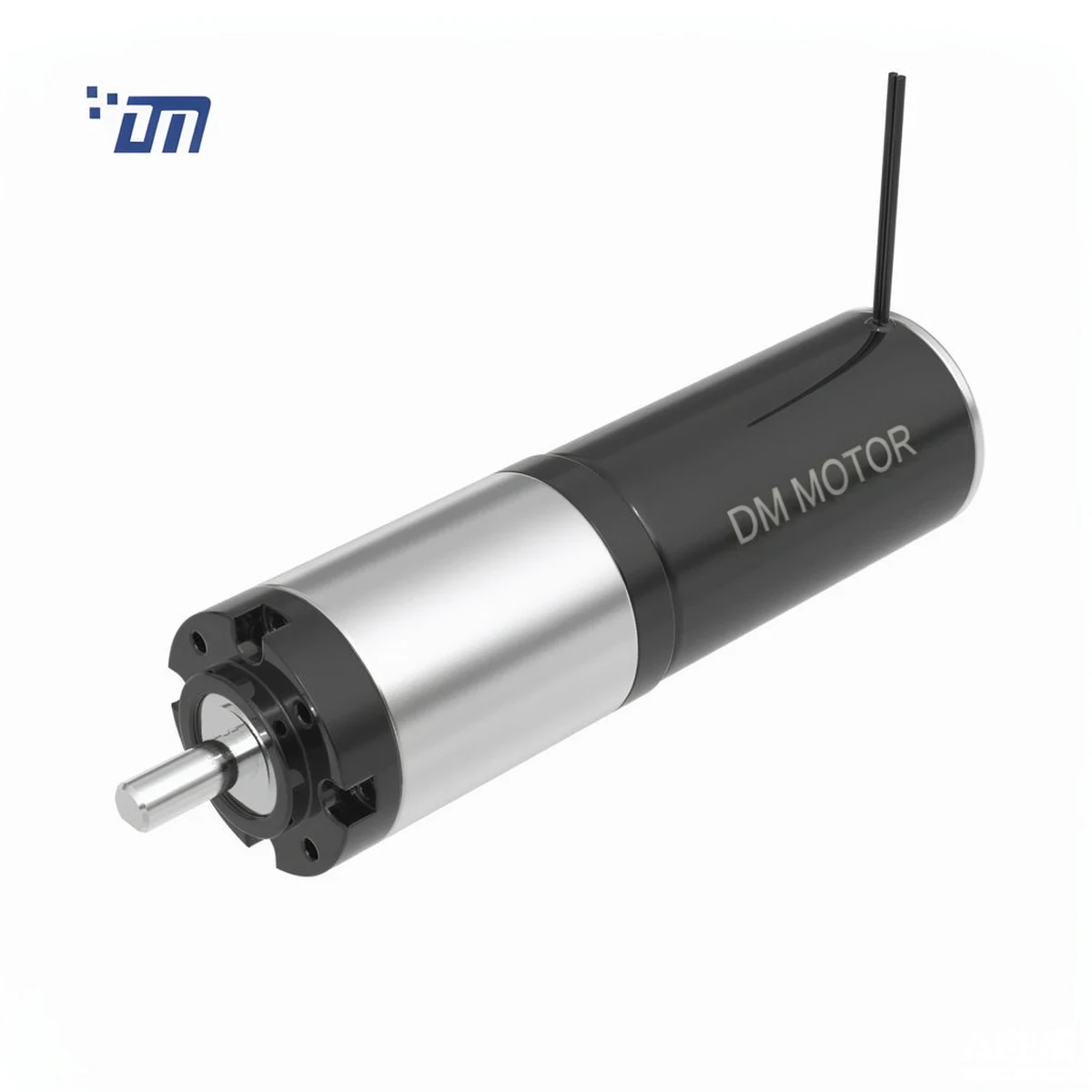
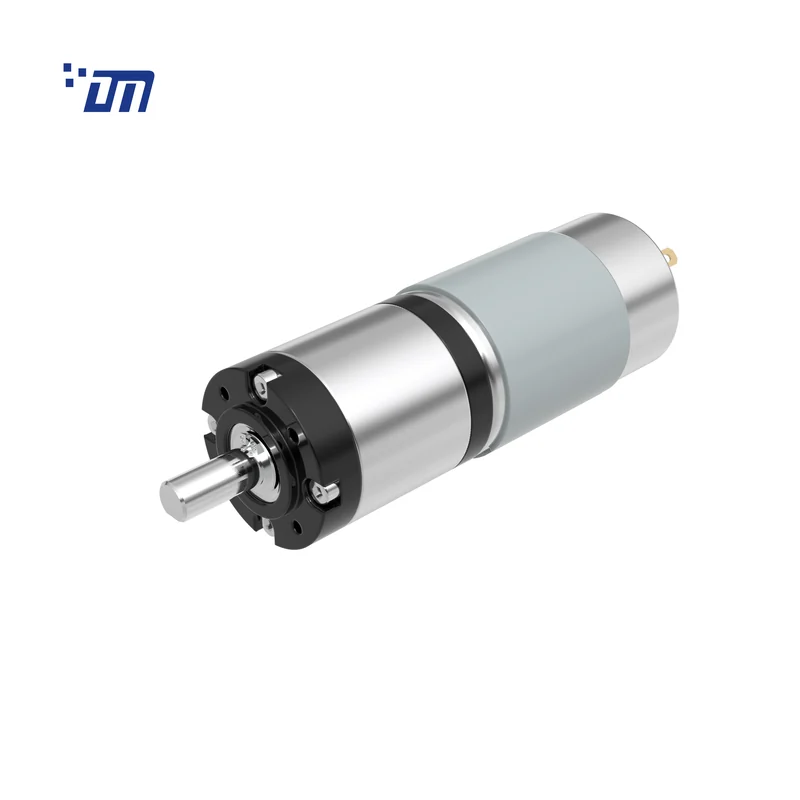
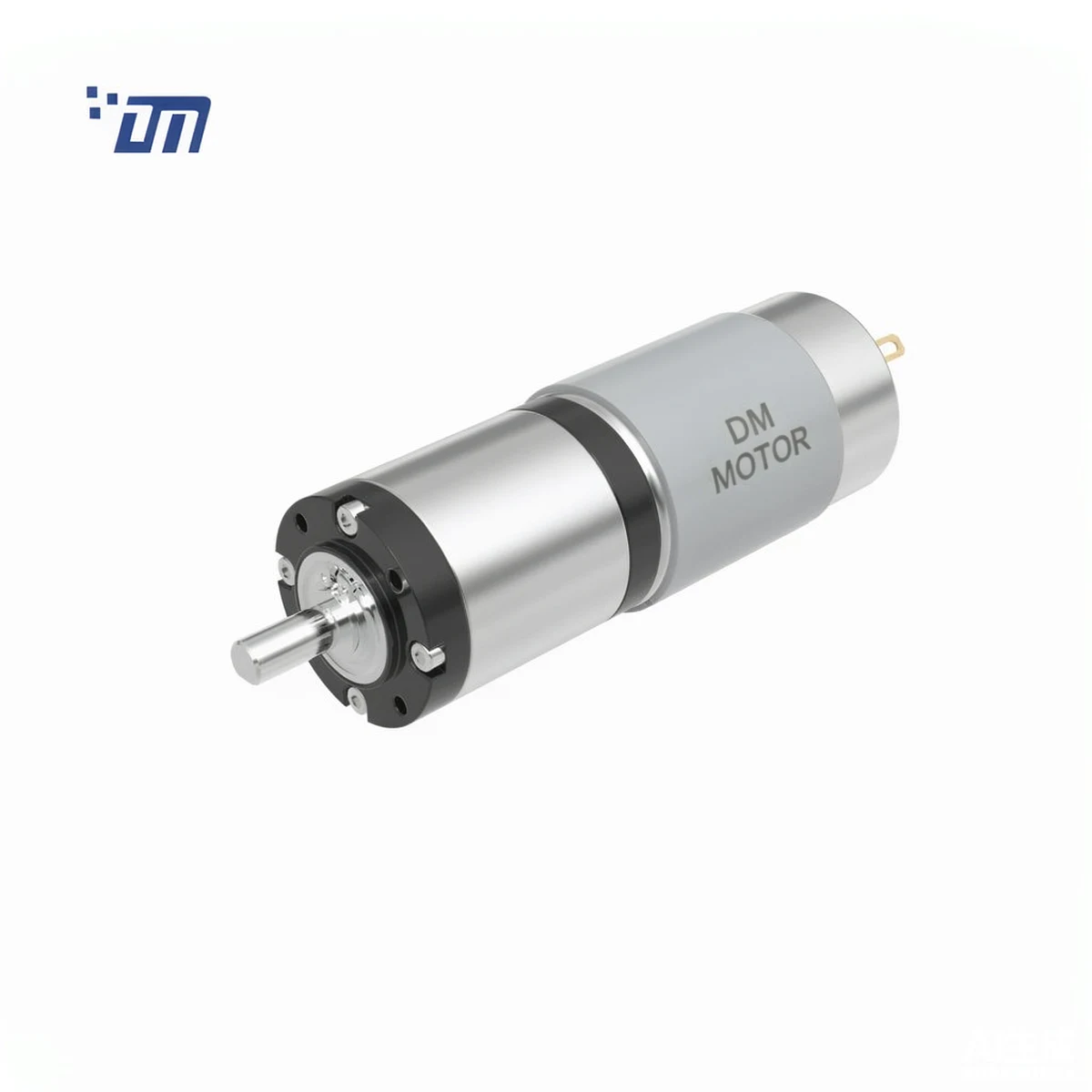
Also in the planetary line: DM-24PM370, DM-28PM2965, DM-36PM597, DM-52PM52ZY and DM-56PM52ZY. Need a brushless drive instead? See the brushless planetary gear motor range.
More stages means more torque and less efficiency
This is the trade every planetary gear motor buyer has to make. The table is the real gearbox data for the 36 mm frame — the same pattern holds across the range, with higher breaking torque on larger frames.
| Stages | Reduction ratios (i) | Gearbox length | Breaking torque | Efficiency |
|---|---|---|---|---|
| 1 stage | 3.7, 5.2 | 26.5 mm | 10 N·m | 90% |
| 2 stages | 14, 19, 27 | 34.7 mm | 18 N·m | 81% |
| 3 stages | 51, 71, 100 | 42.9 mm | 40 N·m | 73% |
| 4 stages | 139, 189, 264, 369 | 51.1 mm | 50 N·m | 65% |
| 5 stages | 515, 721, 977, 1367, 1910 | 59.3 mm | 60 N·m | 59% |
Source: DM-36PM555 gearbox data sheet. Output torque = motor torque × ratio × gearbox efficiency (t = tm · i · η). Adding a stage buys ratio but costs 9–10 points of efficiency and roughly 8 mm of body length.
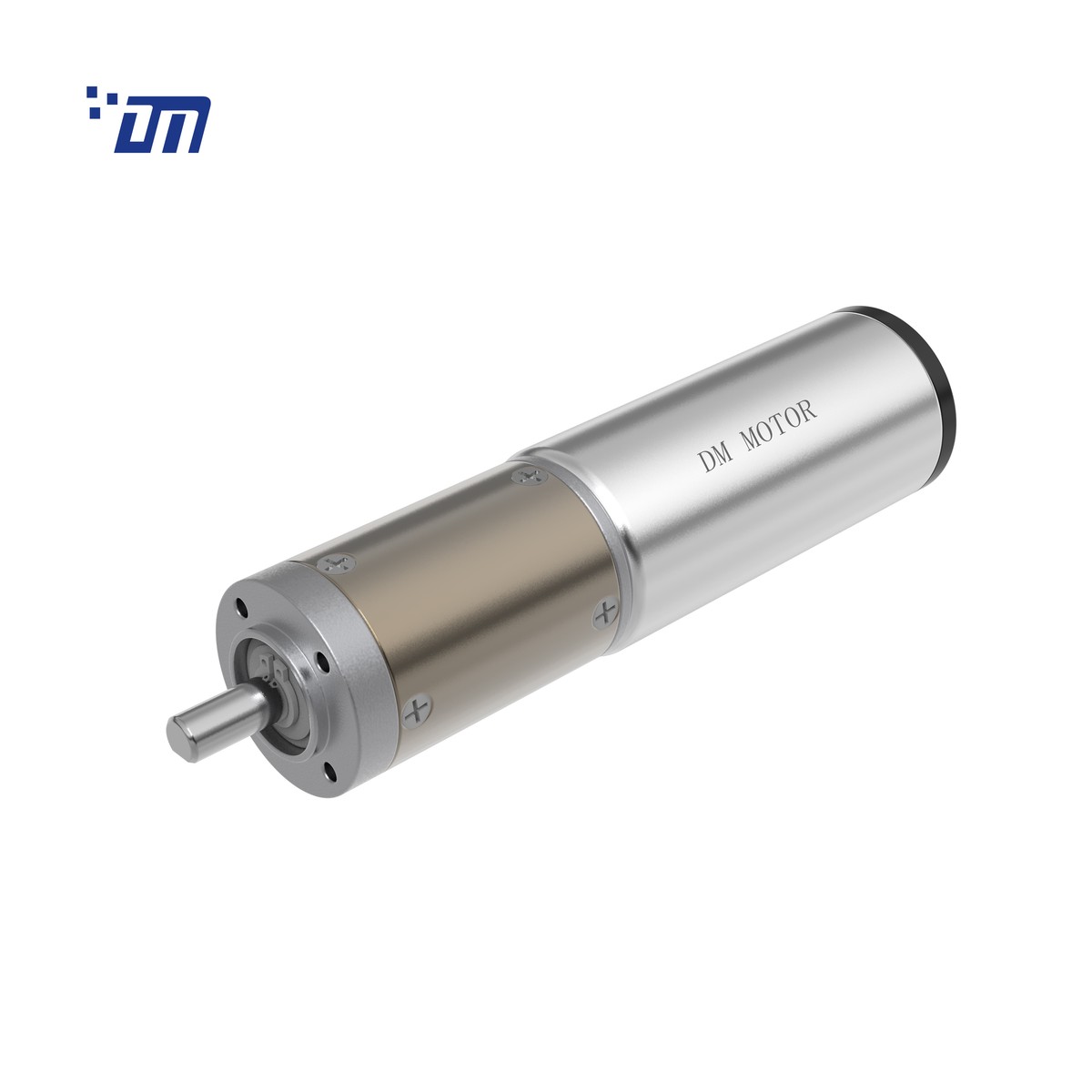
Five stages in a φ36 mm body is a 59.3 mm gearbox. If your envelope is tight, ask for the shortest stage count that still reaches your torque — not the highest ratio on the list.
What we change for OEM projects
Most planetary projects start from a standard frame and change two or three things. These are the dimensions we modify every week:
Gear ratio and stage count
Rated voltage and winding
Cable length and connector
Hall or optical encoder
Mounting flange and hole pattern
Gear material and heat treatment
Noise and lifetime target
IP rating and potting
What we do not do: quote a frame we cannot make. If your torque needs a 70 mm gearbox, we will say so on the first reply rather than promise a φ36 mm unit that will fail in the field.
From drawing to mass production
Send your spec or drawing
Torque at the output, speed, voltage, duty cycle, envelope and expected lifetime.
Engineering review and quotation
We confirm the closest frame, the stage count needed and the price.
Prototype or sample
Test the real gear motor in your machine before committing to a batch.
Trial batch
From 100 pcs for pilot builds and certification testing.
Mass production and QC
Incoming, in-process and final inspection before shipment.
Where planetary gear motors actually get designed in
Planetary wins when you need torque in a short axial length and the output has to sit on the motor axis. These are the six applications we quote most often.
AGV and mobile robot drive wheels
Needs high torque at low speed, quiet running and a short body beside the wheel.
DM-42PM775 / DM-36PM555 — 4-stage, 49:1–125:1, 12–24 V, encoder optional
Robot joints and linear actuators
Needs repeatable positioning, low backlash and a shaft that matches the coupling.
DM-28PM385 / DM-32PM31ZY — D-cut or keyway shaft, Hall encoder on request
Medical beds, chairs and lifts
Needs self-holding under load, low noise in a quiet room, and a duty cycle that tolerates pause-start operation.
DM-36PM555 — up to 60 kgf·cm, 24 V, 5-stage 1910:1 for slow lift travel
Power tools and garden equipment
Needs peak torque for short bursts, impact tolerance and low unit cost at volume.
DM-32PM31ZY / DM-42PM775 — metal planet gears, 12 V, high-ratio 4-stage build
3D printers and dispensers
Needs steady low-speed output, low cogging and backlash tight enough for extrusion control.
DM-22PM2247 / DM-28PM385 — 2–3 stage, 12 V, low-noise gear set
Camera gimbals and pan-tilt heads
Needs very high ratio in a tiny frame with negligible backlash and silent operation.
DM-16PM030 / DM-16PM050 — φ16 mm, up to 1910:1, 3–12 V
Who you are actually buying from
A manufacturer in Shenzhen since 2011, not a trading company. Motor winding, gearbox assembly and final test all run on our own floor.
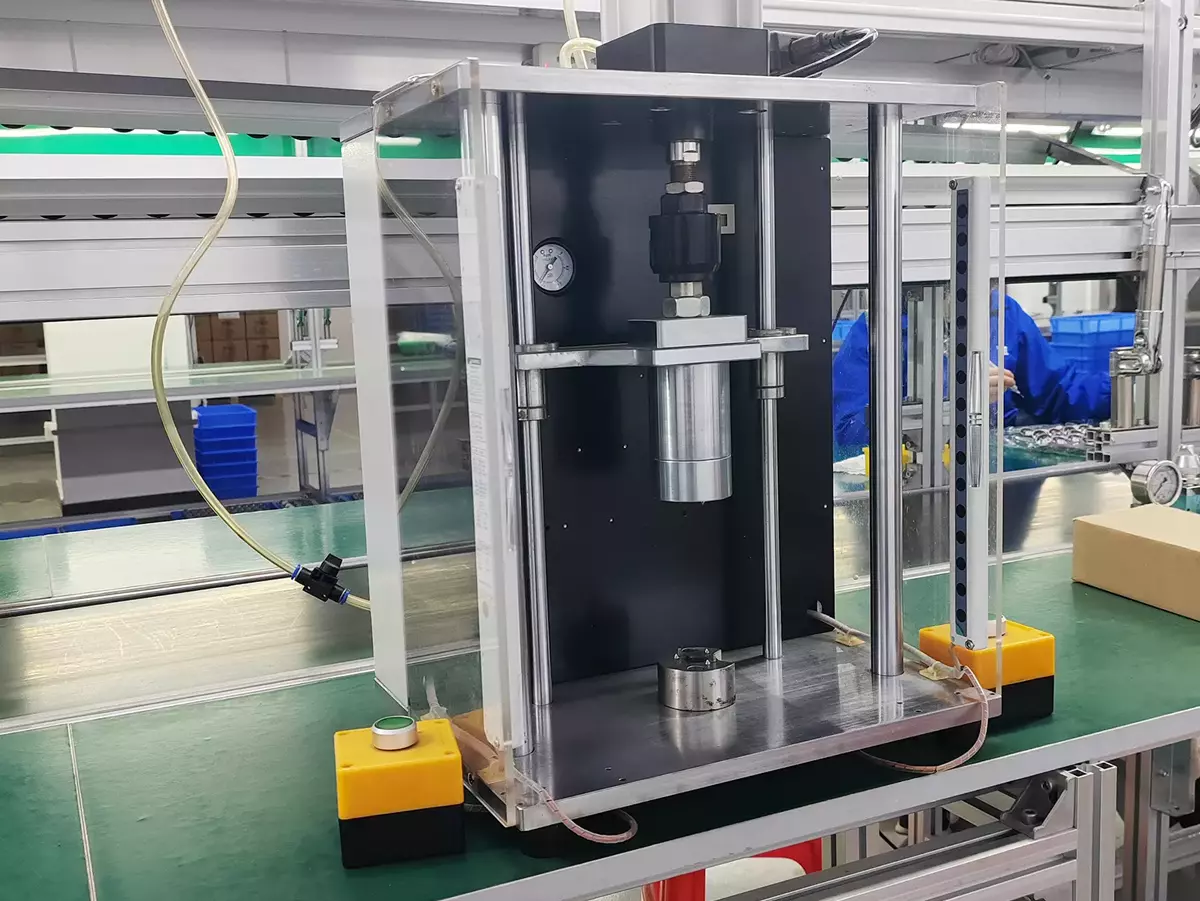
- 3,000 m² production plant — motor winding, gearbox assembly, final test and packing in one building, so a ratio change does not travel between suppliers.
- 4+ semi-automatic production lines, 3,000,000 gear motors a year.
- In-house gear cutting and hobbing for planet, sun and ring gears — that is what makes a 1910:1 five-stage build repeatable instead of a one-off.
- Incoming, in-process and final inspection with torque, current, speed and noise checks on a sampling basis before cartoning.
- 14+ patents and assessed as a Shenzhen High-tech Enterprise.


Planetary, spur or worm — pick on the constraint, not the price
Half of the enquiries we get are for the wrong gearbox type. The right answer follows from one question: what is your hard limit — axial length, mounting direction, or cost per unit?
| Planetary | Spur | Worm | |
|---|---|---|---|
| Output direction | Coaxial with the motor | Offset or coaxial | Right angle, 90° |
| Torque density | Highest — several planets share the load | Moderate | High ratio, lower efficiency |
| Efficiency | 59–90% depending on stages | Highest — typically above planetary at the same ratio | Lowest — high sliding loss |
| Self-locking | No | No | Yes — load holds when power is cut |
| Body length for the same ratio | Shortest | Longer, stacked stages | Short axially, grows sideways |
| Best for | AGV, robot joints, medical beds, tools | High-volume cost-driven builds | Roller blinds, barriers, locks |
We build all three, so the recommendation does not cost us a product line. Compare on the spur and worm ranges if the table points there.
The questions engineers send us first
How do I work out the output torque I will get?
Output torque = motor torque × gear ratio × gearbox efficiency. For a 5-stage 1910:1 unit the efficiency is 59%, not 100% — a common reason a first prototype feels weak. Send the torque you need at the shaft and we will work back to the ratio and motor.
What is the difference between 3.7:1 and 1910:1 in practice?
3.7:1 is a single stage: shortest body (26.5 mm on the 36 mm frame), highest efficiency at 90%, lowest torque multiplication. 1910:1 is five stages: 59.3 mm of gearbox, 59% efficiency, and enough reduction to turn a 3000 RPM motor into 1.6 RPM at the shaft.
Can a φ16 mm gear motor really produce 50 kgf·cm?
Yes, but only at the low end of the speed range with a multi-stage gearbox, and that figure is close to the gearbox limit rather than a comfortable continuous rating. For a φ16 mm frame, design around 5–10 kgf·cm continuous and treat the top of the range as intermittent.
What backlash can you hold?
We do not publish one backlash number, because it depends on stage count, gear set and load. Tell us the positioning accuracy your machine needs and we will quote a build against it — a 2-stage frame and a 5-stage frame are not the same conversation.
Can you add an encoder to a planetary gear motor?
Yes. Hall effect encoders with 2-channel quadrature output and 12–64 PPR mount on the motor shaft, before the gearbox, so resolution multiplies by the ratio. We also build the encoder in-house, which keeps the cable exit and connector matched to your harness.
What is the minimum order quantity?
Trial batch starts at 100 pcs on a standard frame with a changed shaft, cable or connector. Mass production starts at 500 pcs. A new gear ratio, a new winding or a new gearbox needs tooling, and the minimum rises with it. Tell us your annual volume and we will quote the honest break point.
How long does a sample take, and what does it cost?
Samples of standard models ship from stock in days. A modified shaft or winding typically takes one to two weeks. Sample cost is quoted per project and is normally credited against the first production order — ask for the terms in writing on the quote.
Can you match a competitor part number?
Usually. Send the part number, the old datasheet or a photo with a caliper reading and we will match frame diameter, shaft, ratio and mounting instead of working from a description. That shortens the first quote considerably and avoids a wrong sample.
Do you supply to the EU and US, and what documents come with the shipment?
Yes. CE and RoHS declarations, a test report for the delivered batch, and packing lists are standard. REACH statements and UL-recognised components are available on request. Tell us the destination market when you enquire so the paperwork is prepared with the order, not after it.
Send torque, speed and envelope.
We reply within 15 hours.
One drawing or a photo with dimensions is enough to start. Our engineers come back with the closest frame, the stage count needed and a price — no obligation.
- Load & application — what it drives, the torque at the shaft, duty cycle
- Speed & voltage — output RPM at the load, supply voltage
- Envelope & interface — max diameter and length, shaft, flange, cable exit
- Stage & volume — sample, pilot or production; annual quantity; certifications
Tell us what you need
Fields marked * are required. A drawing or datasheet helps — attach it below.