
DC Worm Gear Motor Comprehensive Guide
What Is a DC Worm Gear Motor?
A DC worm gear motor is an integrated drive system that combines a DC electric motor with a worm gearbox to deliver low-speed, high-torque rotational output. It consists of two main components: the DC motor, which converts electrical energy into mechanical rotation, and the worm gearbox, which reduces speed and increases output torque.
The DC motor generates rotational motion when electrical current flows through its windings and interacts with the magnetic field. The motor shaft is connected directly to the worm shaft inside the gearbox. The worm, typically a screw-shaped gear, meshes with a worm wheel positioned at a 90-degree angle. As the worm rotates, it drives the worm wheel, transmitting power through the gearbox.
This gear transmission provides a high reduction ratio in a compact structure, allowing the motor to produce greater output torque at lower speeds. Another important characteristic is its self-locking capability. Depending on the lead angle, friction, and gearbox design, the worm transmission can resist reverse rotation when the motor stops, helping maintain the load position without continuous electrical power.
DC worm gear motors are widely used in automatic doors, electric curtains, coffee vending machines, medical equipment, and industrial automation. Their compact design, high torque, low-speed operation, and potential self-locking performance make them an excellent solution for applications requiring controlled movement and reliable load positioning.
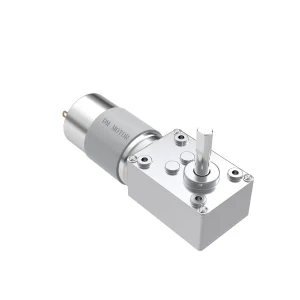
What Is the Construction of a Worm Gearbox in a DC Worm Gear Motor?
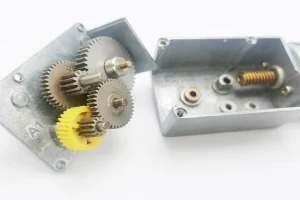
The worm gearbox in a DC worm gear motor is a mechanical transmission system designed to reduce rotational speed while increasing output torque. Its main components include a worm shaft, worm wheel, gearbox housing, output shaft, bearings, and lubrication system.
The worm shaft is a threaded, screw-shaped gear connected to the DC motor shaft. When the motor operates, the worm rotates and drives the worm wheel through the meshing of their gear teeth. The worm wheel is usually positioned at a 90-degree angle to the worm shaft, allowing power transmission between perpendicular shafts.
The worm wheel typically consists of a bronze or other wear-resistant metal gear, while the worm shaft is commonly made of hardened steel. This material combination helps reduce friction and wear during operation.
The gearbox housing supports and protects the internal transmission components, maintaining accurate gear alignment. Bearings support the rotating shafts, reducing friction and ensuring stable operation. Lubricating grease or oil helps minimize friction, heat generation, and mechanical wear.
Depending on the gear ratio and worm design, the gearbox can provide high torque, low-speed output, and self-locking characteristics. Its compact structure and 90-degree transmission design make it suitable for automatic doors, electric curtains, coffee vending machines, and other automated equipment.
How Does a DC Worm Gear Motor Work? A Complete Guide to Its Working Principle
A DC worm gear motor is an integrated drive system that combines a DC electric motor with a worm gearbox to deliver controlled, low-speed, high-torque rotational output. It is widely used in automation equipment where compact dimensions, stable operation, and reliable load positioning are essential. To understand how it works, we need to examine the interaction between the DC motor and the worm gear transmission system.
\\
1. Electrical Energy Is Converted into Rotational Motion
When DC power is supplied to the motor, electric current flows through its internal winding, generating an electromagnetic field. This field interacts with the permanent magnets inside the motor, producing electromagnetic torque that drives the rotor and motor shaft to rotate.
The motor’s rotational speed can be adjusted by changing the supply voltage or using a PWM controller. Reversing the power supply polarity (for a conventional brushed DC motor) reverses the motor’s rotational direction.
2. The Worm Gearbox Reduces Speed and Increases Torque
The motor shaft is connected directly to the worm shaft inside the gearbox. The worm is a screw-shaped gear that meshes with a worm wheel, typically arranged at a 90-degree angle.
When the motor rotates, the worm drives the worm wheel through continuous tooth engagement. This transmission reduces the rotational speed while increasing the output torque. The reduction ratio depends on the number of worm starts and the number of teeth on the worm wheel.
For example, a gearbox with a 30:1 reduction ratio theoretically reduces the output speed to one-thirtieth of the motor speed, while increasing torque according to the gearbox’s mechanical efficiency.
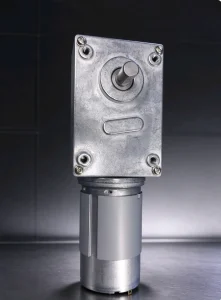
3. Output Motion and Self-Locking Performance
The worm wheel transfers the reduced-speed rotation to the output shaft, which drives the connected mechanical mechanism. Depending on the worm’s lead angle, friction, and gearbox design, certain DC worm gear motors can provide self-locking performance, helping prevent reverse rotation when the motor stops.
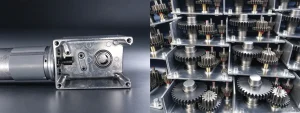
4. Applications in Automation Equipment
Through the integration of the DC motor and worm gearbox, the system provides compact construction, high reduction ratios, low-speed operation, and high output torque. These characteristics make DC worm gear motors suitable for automatic doors, electric curtains, coffee vending machines, medical equipment, and other automated mechanisms requiring controlled movement and reliable positioning.
In summary, a DC worm gear motor uses electromagnetic force to generate rotation and a worm gear transmission to convert high-speed, low-torque motor rotation into low-speed, high-torque output, providing an effective drive solution for modern automation applications.
What Are the Applications of DC Worm Gear Motors?
DC worm gear motors are widely used in automation equipment, household appliances, industrial machinery, and smart devices that require low-speed operation, high output torque, and reliable motion control. By integrating a DC motor with a worm gearbox, they provide compact mechanical transmission, high reduction ratios, and potential self-locking performance, making them suitable for various applications.
-
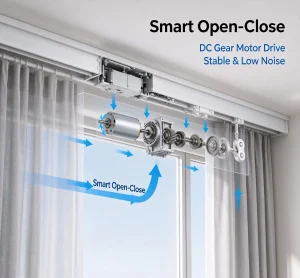
Automatic Doors and Electric Curtains
DC worm gear motors drive automatic doors, electric curtains, window openers, and other motorized mechanisms. Their high output torque enables them to move relatively heavy loads smoothly, while the self-locking characteristics of certain worm gearboxes help maintain the position when the motor stops.
-
Coffee and Beverage Vending Machines
In automatic coffee machines and beverage vending equipment, DC worm gear motors operate dispensing mechanisms, ingredient delivery systems, and adjustment structures. Their low-speed, high-torque output provides stable and controlled mechanical movement, helping improve dispensing accuracy and operational reliability.

-
Medical and Healthcare Equipment
DC worm gear motors are used in adjustable medical beds, examination tables, rehabilitation equipment, and other electrically operated medical devices. Their compact structure and high torque support controlled lifting, tilting, and positioning movements.
-
Industrial Automation Equipment
In industrial applications, these motors drive conveyors, positioning mechanisms, automatic feeding systems, and small mechanical actuators. Their high reduction ratios make them suitable for applications requiring controlled movement within limited installation spaces.
-
Smart Home Appliances
DC worm gear motors can also be found in automatic toilet systems, motorized blinds, smart locks, and adjustable furniture, providing convenient and automated movement.
Overall, DC worm gear motors offer a practical drive solution for applications requiring compact dimensions, high torque, reduced output speed, and dependable mechanical positioning.
{acf_post_brief}