
Key Considerations When Customizing Brushed DC Gear Motors
In modern automation, robotics, automotive actuators, and smart devices, brushed DC gear motors remain one of the most widely used motion control solutions due to their simplicity, low cost, and excellent torque output.
However, many engineers discover a common problem during product development:
A brushed DC gear motor that performs well on paper may still fail in real-world applications.
The root cause is often not motor quality, but poor customization decisions during early design stages.
Customizing a brushed DC gear motor involves much more than choosing voltage and speed. Engineers must consider electrical performance, mechanical integration, gearbox design, thermal behavior, service life, and manufacturing scalability.
This guide explains the most important precautions when customizing brushed DC gear motors and how to avoid costly design mistakes.
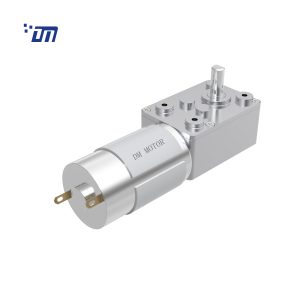
What Is a Custom Brushed DC Gear Motor?
A custom brushed DC gear motor combines:
- A brushed DC motor
- A reduction gearbox
- Optional output shaft modifications
- Optional control or feedback components
The purpose of customization is to optimize the motor for specific application requirements such as:
- Higher torque
- Lower speed
- Reduced noise
- Compact installation space
- Longer service life
Typical application fields include:
- Smart locks
- Medical devices
- Vending machines
- Automotive actuators
- Cash handling equipment
- Industrial automation systems
Clearly Define Electrical Requirements
The first step in customization is understanding the motor’s electrical operating conditions.
Critical parameters include:
Operating Voltage
Typical brushed DC gear motors operate between:
- 3V
- 6V
- 12V
- 24V
Voltage directly affects speed, current, and power consumption.
Rated Current and Peak Current
Engineers must define:
- Normal operating current
- Startup current
- Stall current
Ignoring stall current often causes:
- Driver board damage
- MOS overheating
- Power supply instability
This is especially important for battery-powered products.
Speed Requirement
Avoid designing around no-load speed alone.
Always calculate:
- Required output RPM under actual load
- Speed drop during continuous operation
A motor running at 100 RPM no-load may operate at only 70 RPM under real working conditions.
Carefully Calculate Required Torque
Torque calculation is one of the most critical steps in motor customization.
Required torque depends on:
- Load mass
- Friction
- Transmission efficiency
- Acceleration requirement
- Safety margin
A common engineering mistake is choosing motors with insufficient startup torque.
Recommended Safety Margin
Professional motor selection typically uses:
Required torque × 1.5–2.0
This margin helps compensate for:
- Gear wear
- Aging brushes
- Temperature variation
- Unexpected overloads
Without sufficient torque margin, motors may stall or suffer excessive wear.
Choose the Right Gearbox Type and Gear Ratio
The gearbox determines output speed and torque multiplication.
Common gearbox types include:
| Gearbox Type | Advantage | Application |
| Spur Gearbox | Low cost, simple | General products |
| Planetary Gearbox | High torque density | Precision systems |
| Worm Gearbox | Self-locking | Lifting systems |
| Flat Gearbox | Compact | Limited spaces |
Gear Ratio Selection
Higher reduction ratios provide:
- Lower speed
- Higher torque
But also introduce:
- Lower efficiency
- More backlash
- Increased noise
Finding the right balance is essential.
Pay Attention to Brush Life
Unlike brushless motors, brushed motors contain consumable brushes.
Brush life depends on:
- Operating current
- Duty cycle
- Commutation quality
- Load conditions
Excessive current causes:
- Carbon brush wear
- Commutator overheating
- Carbon dust accumulation
This can shorten service life dramatically.
Applications requiring long continuous duty cycles should pay special attention to brush durability.
Thermal Management Is Often Overlooked
Temperature rise is one of the biggest hidden failure factors.
Heat is mainly generated from:
- Copper loss
- Brush friction
- Gear friction
- Stall conditions
Excessive heat can cause:
- Magnet weakening
- Lubricant degradation
- Plastic gear deformation
- Reduced motor lifespan
Important thermal design questions:
- Ambient temperature?
- Continuous or intermittent duty?
- Ventilation available?
Thermal validation during prototyping is highly recommended.
Shaft and Mechanical Interface Must Match Precisely
Mechanical mismatch frequently causes integration failure.
Output shaft customization options include:
- D-shaft
- Round shaft
- Threaded shaft
- Hollow shaft
- Pinion-integrated shaft
Critical dimensions:
- Shaft diameter
- Shaft length
- Flat depth
- Thread tolerance
Even small tolerance errors may cause:
- Slippage
- Vibration
- Premature bearing wear
Consider Noise and Vibration Requirements
Noise becomes critical in consumer products.
Examples:
- Smart home devices
- Medical equipment
- Office machines
Major noise sources include:
- Brush commutation
- Gear meshing
- Bearing vibration
- Housing resonance
Noise reduction methods:
- Plastic gears
- Precision gear machining
- Better lubrication
- Lower backlash design
Low-noise customization should be discussed early with suppliers.
Validate Service Life and Duty Cycle
Motor lifespan is application dependent.
Important lifecycle questions:
- How many start-stop cycles per day?
- Daily operating hours?
- Continuous load duration?
Examples:
A smart lock may operate:
- 10–20 cycles/day
An industrial actuator may operate:
- 10,000+ cycles/day
These scenarios require very different designs.
Always define expected service life before mass production.
Evaluate Manufacturer Engineering Capability
Selecting the right supplier matters as much as selecting the motor.
A reliable manufacturer should provide:
- Engineering consultation
- Gear ratio recommendation
- Prototype support
- Life testing capability
- Stable mass production
Avoid relying solely on catalog specifications.
Good suppliers help optimize designs rather than simply manufacture drawings.
Why choose a brushed DC gear motor instead of a brushless motor?
Brushed DC gear motors offer lower cost, simpler control, and easier integration for many applications.
What is the biggest risk in motor customization?
Incorrect torque calculation and poor thermal design are the most common causes of failure.
How long does a brushed DC gear motor last?
Service life varies greatly depending on load, current, duty cycle, and brush material.
Customizing a brushed DC gear motor is not simply a specification exercise—it is a complete engineering process.
Successful customization requires balancing:
- Torque
- Speed
- Efficiency
- Noise
- Heat
- Reliability
- Manufacturing consistency
When these factors are properly addressed during design and validation, brushed DC gear motors can deliver highly reliable and cost-effective performance across a wide range of industrial and consumer applications.
This article is shared by DongMing Motor