
What Is a DC Gear Motor? Working Principle, Types, Torque and Application
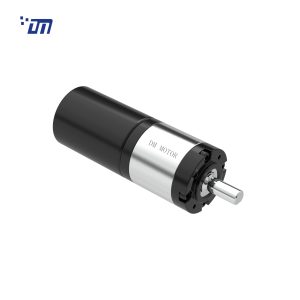
In one automation project I worked on, the software system performed perfectly, sensors were accurate, and control logic was stable—yet the machine still failed during testing. The root cause was surprisingly simple: insufficient torque. The motor rotated fast, but it could not generate enough force to move the load under peak resistance.
After replacing the original drive unit with a higher-ratio planetary gear motor, output torque increased significantly while maintaining the same compact size. That experience reinforced a fundamental engineering principle: in motion control systems, usable torque matters far more than raw motor speed.
This is exactly why DC gear motors are widely used in modern intelligent hardware. From robotic arms and smart locks to vending machines and medical devices, DC gear motors act as the mechanical “muscle” that converts electrical energy into controlled physical movement.
This guide explains what a DC gear motor is, how it works, its major types, and how engineers select the right one for different applications.
What Is a DC Gear Motor?
A DC gear motor is an integrated electromechanical system that combines:
- A DC motor
- A reduction gearbox
The DC motor generates rotational power at high speed, while the gearbox reduces output speed and multiplies torque to produce usable mechanical force.
Without gear reduction, most small DC motors spin at extremely high RPM but provide limited torque, making them unsuitable for heavy-load applications. By adding a gearbox, engineers can convert fast rotation into slow, controlled, high-force output.
This makes DC gear motors ideal for applications requiring:
- High torque
- Low speed
- Precise positioning
- Stable load handling
Common applications include:
- Smart locks
- Robot joints
- Vending machines
- Medical pumps
- AGV drive systems
- Automatic curtains
- Industrial actuators
How Does a DC Gear Motor Work?
A DC gear motor operates in three stages:
1. Electrical Energy Converts into Rotation
When voltage is applied, current flows through the motor windings and creates a magnetic field. Interaction between magnetic fields generates rotational motion in the rotor.
Depending on design, the motor may be:
- Brushed DC motor
- Brushless DC motor (BLDC)
Brushed motors use carbon brushes and commutators for switching current, while brushless motors rely on electronic controllers.
The motor shaft typically rotates at thousands—or even tens of thousands—of RPM.
2. High-Speed Rotation Enters the Gearbox
The motor shaft drives the gearbox input gear. Inside the gearbox, a sequence of gears progressively reduces rotational speed.
Each gear stage trades speed for torque.
For example:
- Motor speed = 6000 RPM
- Gear ratio = 100:1
Output speed becomes:
60 RPM
3. Torque Multiplies at Output Shaft
The core torque relationship is: [ T_{out}=T_{in}\times i \times \eta ]
Where:
- Tout= output torque
- Tin= motor torque
- i= gear ratio
- η= gearbox efficiency
This means higher gear ratios produce greater output torque.
For engineers, this formula is essential when sizing motors for load requirements.
Why Use a Gearbox?
Small motors naturally produce:
- High speed
- Low torque
Most real-world systems need the opposite:
- Low speed
- High torque
A gearbox solves this mismatch.
Benefits include:
Torque Amplification
Higher load-driving capability.
Speed Reduction
More controlled movement.
Improved Precision
Better positioning accuracy.
Better Load Stability
Prevents speed collapse under load.
Without a gearbox, many automation systems would fail to start or stall under resistance.
Major Types of DC Gear Motors
Not all gearboxes behave the same. Different architectures provide different advantages.
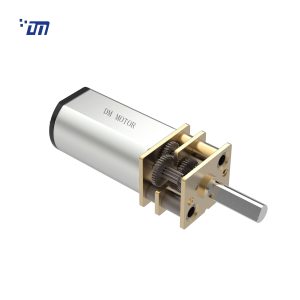
1. DC Spur Gear Motor
Spur gear motors use straight-cut gears arranged on parallel shafts.
They are among the most common and economical gearbox designs.
Advantages
- High transmission efficiency
- Simple structure
- Low manufacturing cost
- Reliable for light to medium loads
Applications
- Smart curtains
- Dispensers
- Toys
- Vending systems
Spur gear motors are often selected when cost efficiency matters most.
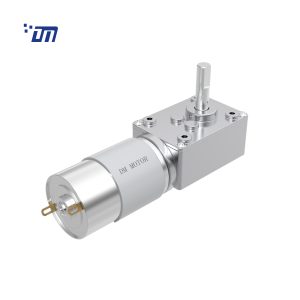
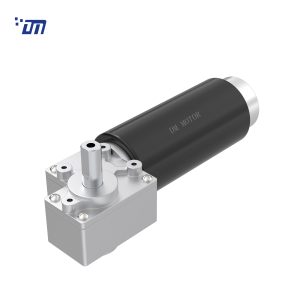
2. DC Worm Gear Motor
Worm gear motors use a worm screw meshing with a worm wheel at 90 degrees.
Their biggest advantage is self-locking capability.
This means the output shaft resists reverse motion under external force.
Advantages
- Self-locking
- Compact right-angle layout
- High reduction ratio
- Strong load holding capability
Applications
- Smart locks
- Valve actuators
- Electric doors
- Lift systems
They are ideal where back-driving must be prevented.
3. DC Planetary Gear Motor
Planetary gear motors are widely considered the premium gearbox solution.
They include:
- Sun gear
- Planet gears
- Ring gear
Multiple planet gears share the load simultaneously.
This structure enables extremely high torque density.
Advantages
- High torque output
- Low backlash
- Excellent durability
- Compact size
- High efficiency
Applications
- Robotics
- AGVs
- Medical devices
- Precision automation
Planetary gear motors are preferred in high-performance systems.
Gearbox Comparison Table
| Gear Type | Efficiency | Torque Capacity | Backlash | Best For |
| Spur | 90–98% | Medium | Medium | Cost-sensitive devices |
| Worm | 50–90% | High | Low | Self-locking systems |
| Planetary | 90–97% | Very High | Very Low | Precision robotics |
This comparison helps engineers quickly evaluate suitable gearbox architectures.
Brushed vs Brushless DC Gear Motors
Gearbox selection is only half the decision. Motor type also matters.
Brushed DC Gear Motor
Brushed motors use:
- Carbon brushes
- Commutator
Advantages:
- Lower cost
- Easy control
- Mature technology
Limitations:
- Brush wear
- Sparking
- Higher maintenance
Suitable for:
- Consumer electronics
- Toys
- Intermittent-use systems
Brushless DC Gear Motor (BLDC)
BLDC motors eliminate physical brushes and use electronic commutation.
Advantages:
- Higher efficiency
- Longer lifespan
- Lower noise
- Better thermal performance
- No sparking
Suitable for:
- Industrial automation
- Medical devices
- Robotics
- High-duty-cycle systems
BLDC gear motors are increasingly becoming the preferred choice for premium hardware.
How to Select the Right DC Gear Motor
Selecting the wrong motor can cause:
- Stalling
- Overheating
- Premature wear
- Product failure
Use this engineering framework.
Step 1: Define Operating Voltage
Determine system voltage:
- 3V
- 6V
- 12V
- 24V
Voltage determines motor compatibility.
Step 2: Calculate Required Torque
Calculate:
- Load weight
- Friction
- Acceleration force
- Peak resistance
Always use rated torque rather than stall torque.
Add 20–30% safety margin.
This prevents overload during peak operation.
Step 3: Determine Required Speed
Speed is usually measured in RPM.
Example considerations:
- Opening speed
- Travel speed
- Cycle time
Higher RPM improves speed but reduces torque.
Balance both carefully.
Step 4: Consider Space Constraints
Mechanical layout matters.
Choose:
- Coaxial gearbox for narrow cylindrical space
- Right-angle gearbox for flat installations
Improper motor dimensions often cause redesign costs.
Step 5: Evaluate Duty Cycle
Ask:
How often will the motor run?
Examples:
- 5 cycles/day
- 500 cycles/day
- Continuous 24/7 operation
High-duty applications often require BLDC solutions.
Applications of DC Gear Motors
DC gear motors power countless smart devices.
Examples include:
Smart Home
- Motorized curtains
- Smart locks
- Smart toilets
Industrial Automation
- Conveyor systems
- Robotic joints
- AGVs
Commercial Equipment
- Vending machines
- Parcel lockers
- Coffee dispensers
Medical Equipment
- Pumps
- Diagnostic devices
- Rehabilitation robots
As automation expands, demand for compact high-torque motors continues growing.
Future Trends in DC Gear Motors
The industry is moving toward:
Higher Efficiency
Reduced energy loss.
Lower Noise
Better user experience.
Miniaturization
Smaller motors with higher torque density.
Smart Control
Integration with sensors, encoders, and IoT systems.
These trends are reshaping modern motion control.
What is a DC gear motor?
A DC gear motor combines a DC motor with a gearbox to reduce speed and increase torque.
Why use a gearbox?
A gearbox converts high-speed low-torque motor output into low-speed high-torque mechanical power.
Which gear motor provides highest torque?
Planetary gear motors generally offer the highest torque density.
Are worm gear motors self-locking?
Yes. Many worm gear designs resist back-driving.
Which is better: brushed or brushless?
Brushed motors are cheaper. Brushless motors offer longer lifespan and better efficiency.
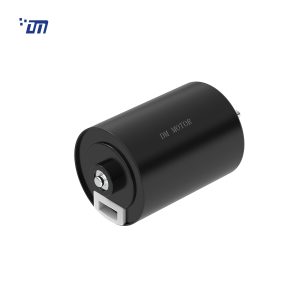
DC gear motors represent the perfect combination of electrical power and mechanical force. While a standard DC motor excels at generating rotational speed, the gearbox transforms that speed into practical torque capable of driving real-world loads.
Whether designing robotics, smart appliances, industrial equipment, or automated consumer products, selecting the correct gear motor directly impacts performance, efficiency, and reliability.
As intelligent hardware continues to evolve, DC gear motors will remain one of the most essential building blocks of modern automation.
This article shares information from Dongming Motor https://www.szdmdcmotor.com
{acf_post_brief}